Floor plan

Style galleriesParis Salon painting
Paris Salon painting
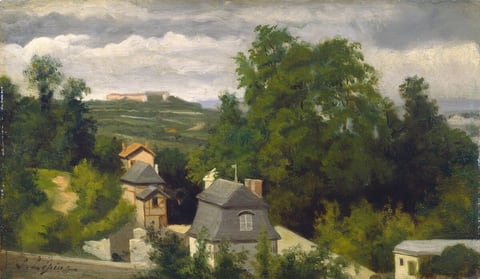
The painting shows an elevated perspective overlooking a landscape with green hills and leafy trees. Closest to us, there are cream-colored buildings among dense foliage. These buildings have roofs in shades of pale blue-gray and reddish-brown, and the one in the center has wispy white smoke coming out of a chimney. In the distance on the left, a large, low structure sits atop a hill, with faint paths winding towards it through the green landscape. Beyond the trees, the distant landscape on the right is painted in shades of pale blue and green. The sky above is filled with puffy clouds in shades of gray.
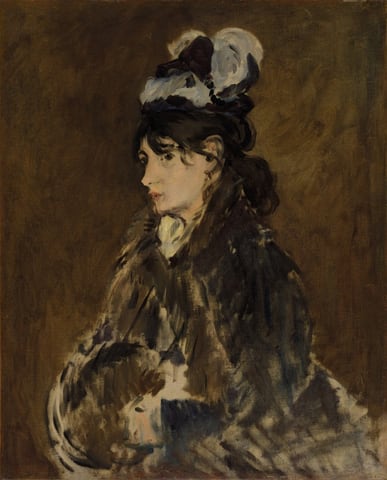
Berthe Morisot with a Muff, by Édouard Manet, c. 1871–72
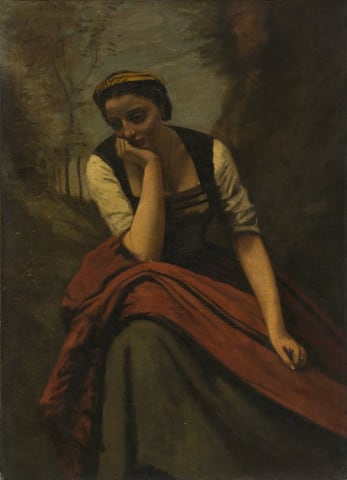
Woman Meditating, by Jean Baptiste Camille Corot, after 1868
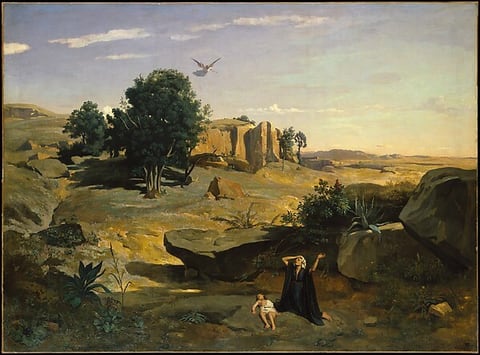
Hagar in the Wilderness, by Jean Baptiste Camille Corot, 1835
A work made of oil on panel.
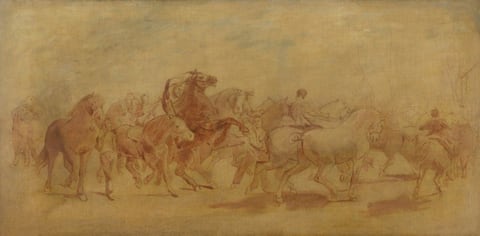
A sketchy black-and-white oil painting of a dozen horses walking in a circle, some with riders. All of the figures are shadowy.

The works in this room are listed below.

Works in this room

Painting made for the great annual exhibition in Paris, and the realists who argued with it.

Section 1, north wall

  1. The painting shows an elevated perspective overlooking a landscape with green hills and leafy trees. Closest to us, there are cream-colored buildings among dense foliage. These buildings have roofs in shades of pale blue-gray and reddish-brown, and the one in the center has wispy white smoke coming out of a chimney. In the distance on the left, a large, low structure sits atop a hill, with faint paths winding towards it through the green landscape. Beyond the trees, the distant landscape on the right is painted in shades of pale blue and green. The sky above is filled with puffy clouds in shades of gray.
    View on the Outskirts of CaenStanislas Lépine, 1872/1875Courtesy National Gallery of Art, Washington
  2. Berthe Morisot with a Muff, by Édouard Manet, c. 1871–72
    Berthe Morisot with a MuffÉdouard Manet, c. 1871–72Courtesy of the Cleveland Museum of Art
  3. Woman Meditating, by Jean Baptiste Camille Corot, after 1868
    Woman MeditatingJean Baptiste Camille Corot, after 1868Courtesy of the Cleveland Museum of Art

Section 1, south wall

  1. Hagar in the Wilderness, by Jean Baptiste Camille Corot, 1835
    Hagar in the WildernessJean Baptiste Camille Corot, 1835Courtesy of The Metropolitan Museum of Art
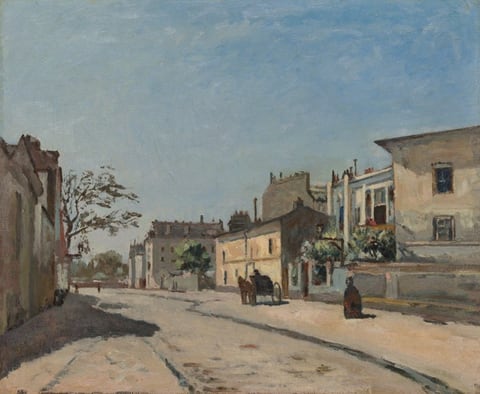
  2. A work made of oil on panel.
    French Street SceneEdouard Béliard, 1873–77Courtesy of the Art Institute of Chicago
  3. A sketchy black-and-white oil painting of a dozen horses walking in a circle, some with riders. All of the figures are shadowy.
    Study for The Horse FairRosa Bonheur, c. 1850Courtesy of the Art Institute of Chicago

Section 2, south wall
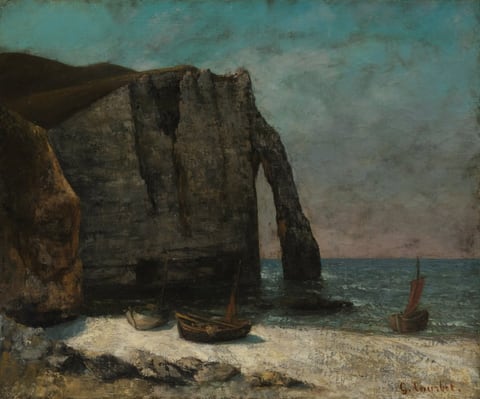
  1. The Cliff at Étretat, by Gustave Courbet, after 1872
    The Cliff at ÉtretatGustave Courbet, after 1872Courtesy of the Cleveland Museum of Art
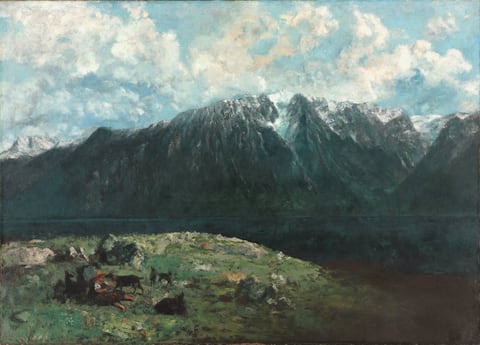
  2. Panoramic View of the Alps, Les Dents du Midi, by Gustave Courbet, 1877
    Panoramic View of the Alps, Les Dents du MidiGustave Courbet, 1877Courtesy of the Cleveland Museum of Art
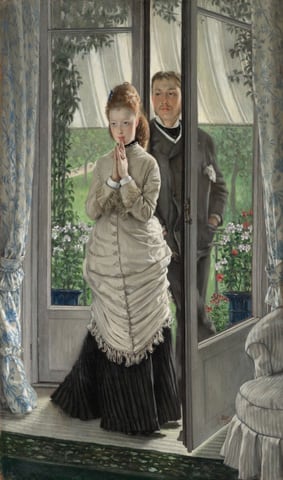
  3. The Lovers, by James Tissot, 1872
    The LoversJames Tissot, 1872Courtesy of the Cleveland Museum of Art

Section 2, north wall
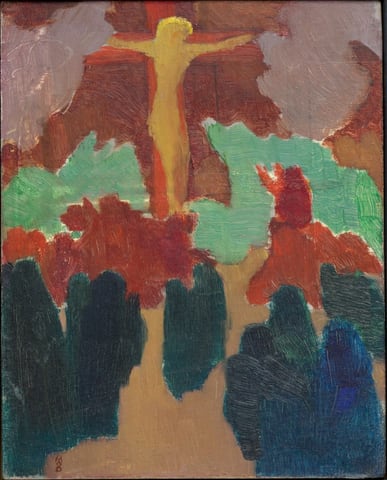
  1. The Orange Christ, by Maurice Denis, 1889
    The Orange ChristMaurice Denis, 1889Courtesy of the Cleveland Museum of Art
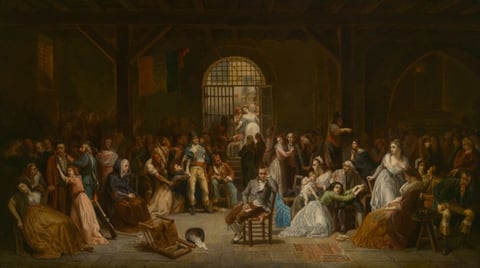
  2. A work made of oil on canvas.
    The Roll Call of the Last Victims of the TerrorCharles Louis-Lucien Muller, c. 1850Courtesy of the Art Institute of Chicago
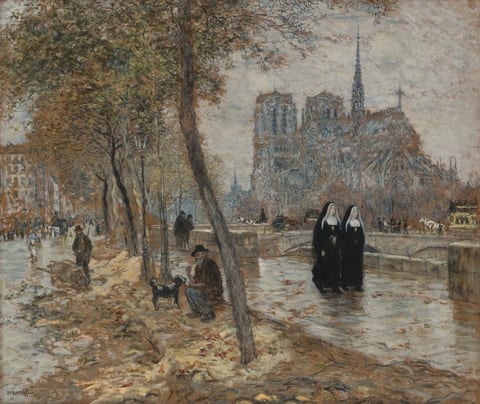
  3. A work made of oil on composition board.
    Notre Dame de ParisJean-François Rafaëlli, c. 1890Courtesy of the Art Institute of Chicago

Section 3, north wall
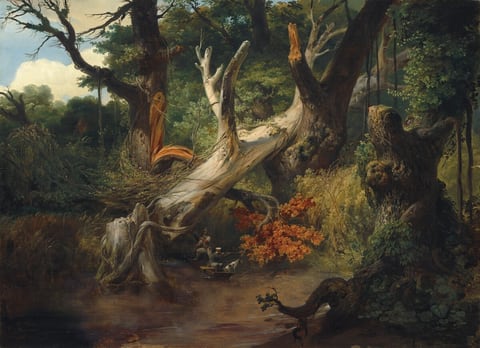
  1. A leafless, ash-white tree trunk has fallen from a broken stump into the wide V of a neighboring tree at the edge of a body of water near a verdant forest in this horizontal landscape painting. The fallen trunk creates a diagonal from near the lower left corner to the upper right. As it fell, it sheared off a substantial branch from a neighboring tree with a dark trunk. The bark where the damaged branch has pulled away is honey-orange, the same color as the leaves at the canopy, which has been pinned under the fallen trunk. Trees, vines, and other vegetation fill the space around and beyond this pair. In the lower right corner of the painting, vines grow over a broken stump, which deep in shadow. Between the stump and fallen tree, the peanut-brown surface of the water is smooth. Tiny in scale beneath the fallen tree and easily overlooked, there are two men and a dog in a boat. One man stands at the back of the boat and pushes it along with a long pole. He wears a tall, brown, cloth hat, a white shirt rolled up to the elbows under a blue vest, and loose-fitting pants. A second man wears a flat-topped, white hat with a black brim, a long, forest-green jacket, and tight-fitting slate-blue pants. He braces a rifle against one shoulder and shoots into the forest. The dog is white with brown spots, and it stands with its front paws on the edge of the boat, presumably ready to spring after the target. A patch of blue sky with puffy white clouds is seen above the trees in the upper left corner. The artist signed and dated the work in the lower right corner: “H. Vernet Rome 1833.”
    Hunting in the Pontine MarshesHorace Vernet, 1833Courtesy National Gallery of Art, Washington
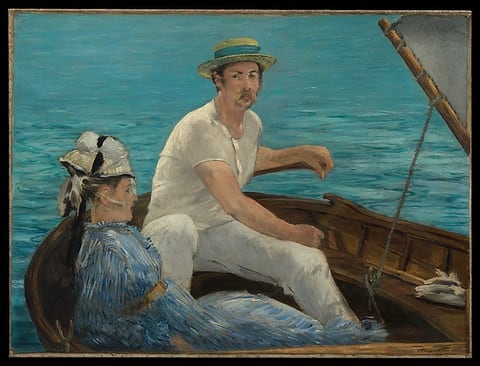
  2. Boating, by Édouard Manet, 1874
    BoatingÉdouard Manet, 1874Courtesy of The Metropolitan Museum of Art

Section 3, south wall
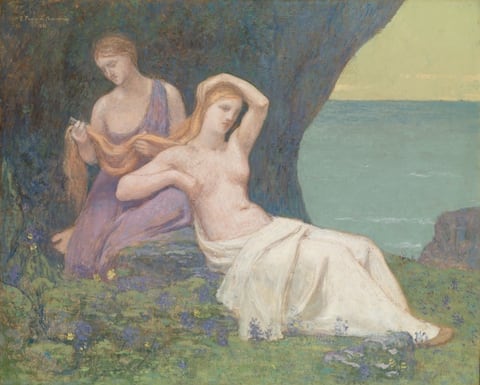
  1. A work made of oil on canvas.
    In the HeatherPierre Puvis de Chavannes, 1896Courtesy of the Art Institute of Chicago
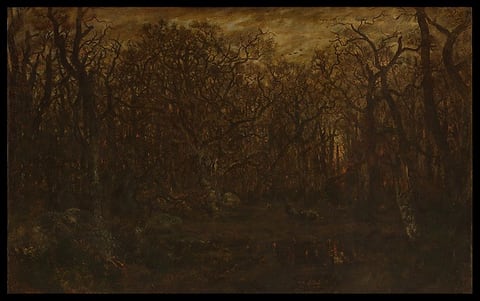
  2. The Forest in Winter at Sunset, by Théodore Rousseau, ca. 1846–67
    The Forest in Winter at SunsetThéodore Rousseau, ca. 1846–67Courtesy of The Metropolitan Museum of Art