Floor plan

Style galleriesEarly modernism

Early modernism

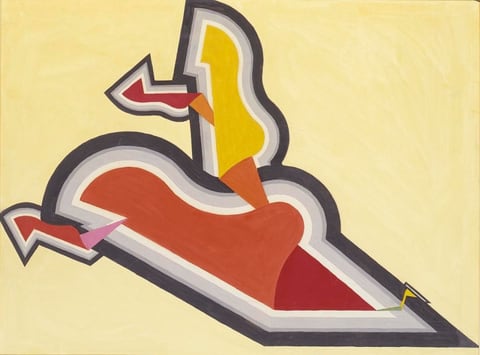
Study in Rhythm: Red and Gold, by Joseph Schillinger, ca. 1934
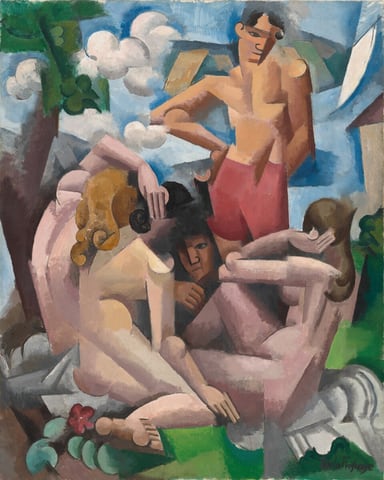
This painting depicts a group of men and women created by a collection of angular, geometric shapes with flat planes and blocks of color. One person is standing, and they appear to be a bare-chested man with tan skin and short, dark hair, who is wearing red shorts. He has his hand on his hip and looks off to the right. At his feet appear to be several seated people, although they are only partially visible. Three women with pale skin seem to be facing away from us; we can see their legs, arms, and torsos, although these don't all fit together. The woman on the left has blonde hair, the woman on the right has brown hair, and the woman between them has short black hair. None of their faces are visible. In the middle of this group, at the center of the painting, we see the face and hand of another person who is looking to the left. This person has light brown skin, and we can't see the rest of their body. Surrounding elements include a blue sky with abstract cloud forms, an angular tree on the left, and patches of brown, white, and green on the ground, with one red flower. A tan rectangle under a red triangle on the right edge suggests a building.
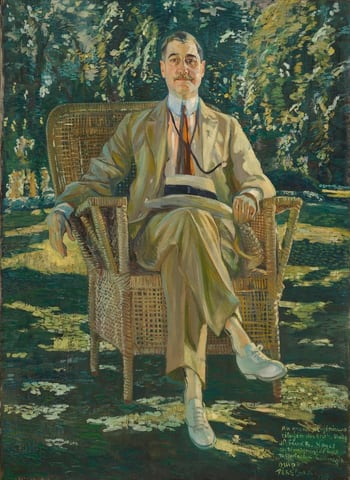
Artist: Ossip Perelma, Sitter: Frank Brett Noyes, Current owner: National Portrait Gallery, Smithsonian Institution
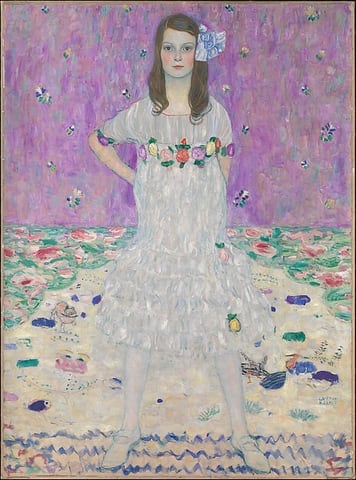
Mäda Primavesi (1903–2000), by Gustav Klimt, 1912–13
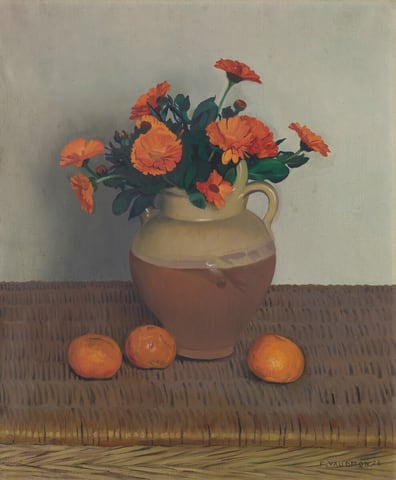
This painting shows a large jug filled with orange flowers on a woven brown surface, with three small oranges placed in front of it. The bottom half of the jug is a brownish-red color, while the top part and handles are a light tan. The jug is centered, with flowers extending slightly to the sides. The flowers in the vase are surrounded by dark green leaves and buds. The wall behind the vase is a light gray color, and the vase casts a light shadow on it.
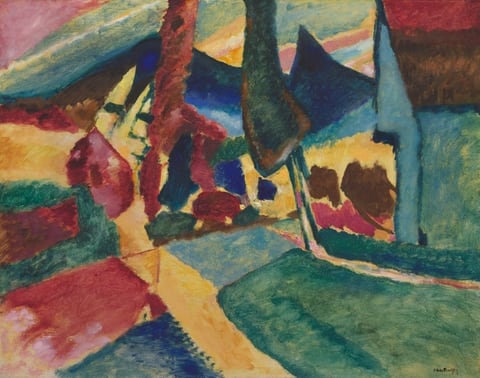
Vibrant yellow, red, blue, and green painting of landscape with trees and mountains.

The works in this room are listed below.

Works in this room

The first decades of the twentieth century, when artists broke with the academy.

First room, north wall

  1. Study in Rhythm: Red and Gold, by Joseph Schillinger, ca. 1934
    Study in Rhythm: Red and GoldJoseph Schillinger, ca. 1934Courtesy of the Smithsonian American Art Museum
  2. This painting depicts a group of men and women created by a collection of angular, geometric shapes with flat planes and blocks of color. One person is standing, and they appear to be a bare-chested man with tan skin and short, dark hair, who is wearing red shorts. He has his hand on his hip and looks off to the right. At his feet appear to be several seated people, although they are only partially visible. Three women with pale skin seem to be facing away from us; we can see their legs, arms, and torsos, although these don't all fit together. The woman on the left has blonde hair, the woman on the right has brown hair, and the woman between them has short black hair. None of their faces are visible. In the middle of this group, at the center of the painting, we see the face and hand of another person who is looking to the left. This person has light brown skin, and we can't see the rest of their body. Surrounding elements include a blue sky with abstract cloud forms, an angular tree on the left, and patches of brown, white, and green on the ground, with one red flower. A tan rectangle under a red triangle on the right edge suggests a building.
    The BathersRoger de La Fresnaye, 1912Courtesy National Gallery of Art, Washington
  3. Artist: Ossip Perelma, Sitter: Frank Brett Noyes, Current owner: National Portrait Gallery, Smithsonian Institution
    Frank Brett NoyesOssip Perelma, 1917Courtesy of the National Portrait Gallery, Smithsonian Institution

First room, south wall

  1. Mäda Primavesi (1903–2000), by Gustav Klimt, 1912–13
    Mäda Primavesi (1903–2000)Gustav Klimt, 1912–13Courtesy of The Metropolitan Museum of Art
  2. This painting shows a large jug filled with orange flowers on a woven brown surface, with three small oranges placed in front of it. The bottom half of the jug is a brownish-red color, while the top part and handles are a light tan. The jug is centered, with flowers extending slightly to the sides. The flowers in the vase are surrounded by dark green leaves and buds. The wall behind the vase is a light gray color, and the vase casts a light shadow on it.
    Marigolds and TangerinesFélix Vallotton, 1924Courtesy National Gallery of Art, Washington
  3. Vibrant yellow, red, blue, and green painting of landscape with trees and mountains.
    Landscape with Two PoplarsVasily Kandinsky, 1912Courtesy of the Art Institute of Chicago

Second room, south wall
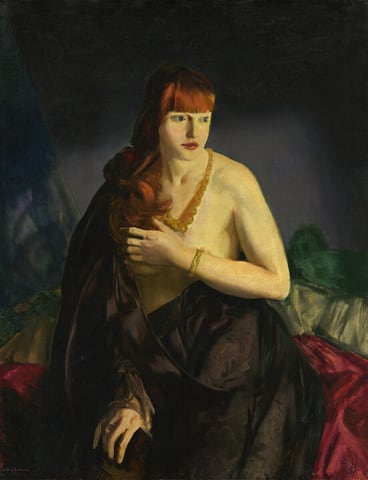
  1. Shown from the knees up, a woman sits partially covered by a black cloth as she holds one forearm across her bare breasts in this vertical painting. The woman has pale, yellow-tinged skin and long, copper-red hair and bangs. Her body faces us, but she turns her head to look off to our right with large blue, wide-set eyes. Her cheeks are flushed, and her full, dark pink lips are closed. A strand of gradually larger amber-yellow beads hangs around her neck, and she wears a gold-colored bracelet on the arm braced across her chest, her left arm, to our right. Glimpses of pale pink nipples are visible. The voluminous black cloth drapes down over one shoulder and across her hips. She wears a ring on the other hand, which emerges from the cloth to rest on that knee. Piles of garnet red, peridot green, and forest green are piled up to chest height behind her, and the background is nickel gray around her body and darkens to black around the top and side edges. The scene is loosely painted, especially in the fabric and background. The artist signed the canvas in the lower left corner, “Geo. Bellows E.S.B.”
    Nude with Red HairGeorge Bellows, 1920Courtesy National Gallery of Art, Washington
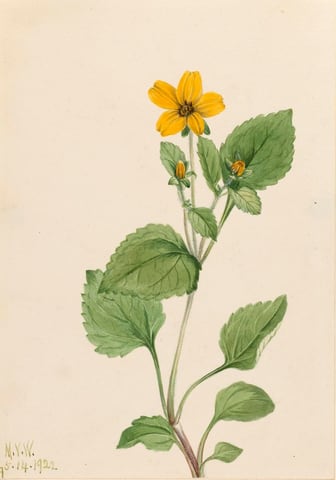
  2. Golden Star (Chrysogonum virginianum), by Mary Vaux Walcott, 1922
    Golden Star (Chrysogonum virginianum)Mary Vaux Walcott, 1922Courtesy of the Smithsonian American Art Museum
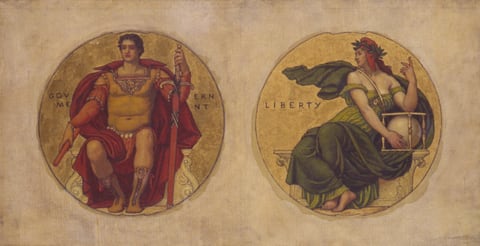
  3. Study for mosaic in the Wisconsin State Capital "Government and Liberty", by Kenyon Cox, ca. 1912
    Study for mosaic in the Wisconsin State Capital "Government and Liberty"Kenyon Cox, ca. 1912Courtesy of the Smithsonian American Art Museum
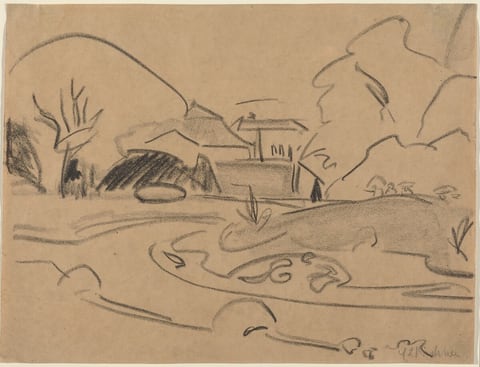
  4. The image shows a landscape drawing with buildings, trees, and a winding path or water feature. The drawing is done in black charcoal on brownish background paper, creating a monochromatic color palette.
    Footpaths and Pavilion in the Dresden Grosser GartenErnst Ludwig Kirchner, c. 1909Courtesy National Gallery of Art, Washington

Second room, north wall
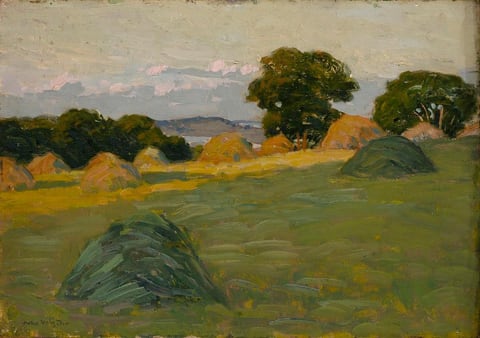
  1. The Hill Field, by Arthur Wesley Dow, 1908-1910
    The Hill FieldArthur Wesley Dow, 1908-1910Courtesy of the Smithsonian American Art Museum
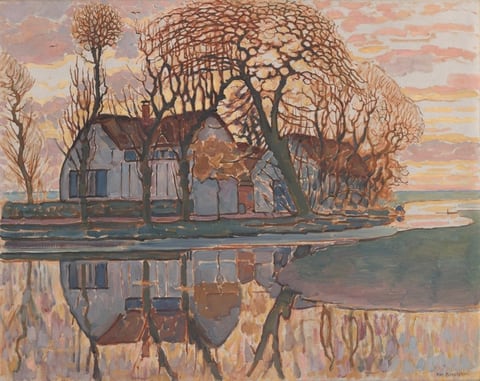
  2. A work made of oil on canvas.
    Farm near DuivendrechtPiet Mondrian, c. 1916Courtesy of the Art Institute of Chicago
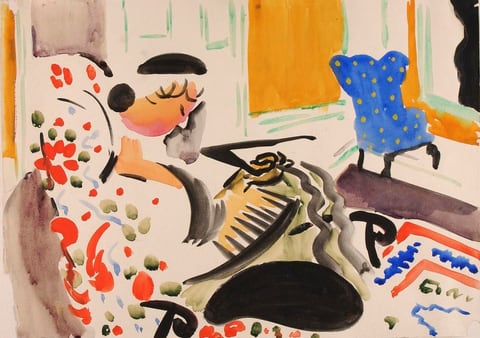
  3. Calligraphic Interior, by H. Lyman Saÿen, ca. 1915
    Calligraphic InteriorH. Lyman Saÿen, ca. 1915Courtesy of the Smithsonian American Art Museum
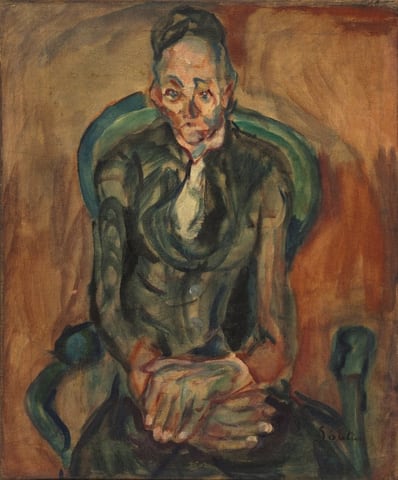
  4. Old Woman, by Chaïm Soutine, c. 1923–24
    Old WomanChaïm Soutine, c. 1923–24Courtesy of the Cleveland Museum of Art

Third room, north wall
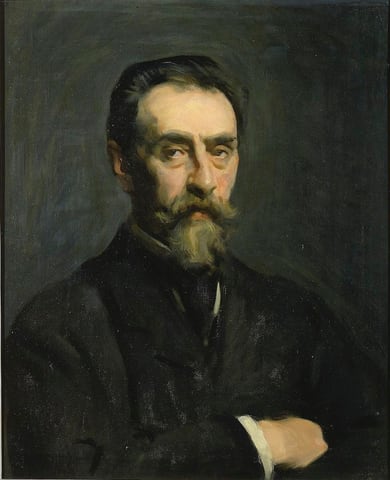
  1. Portrait of William E. Norton, by William Penhallow Henderson, 1901
    Portrait of William E. NortonWilliam Penhallow Henderson, 1901Courtesy of the Smithsonian American Art Museum
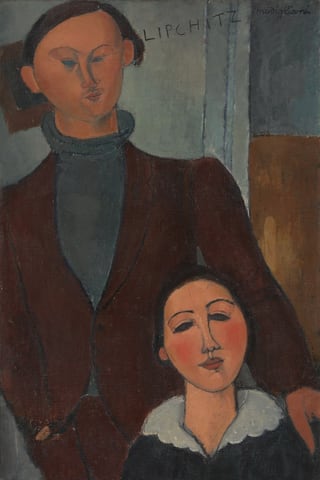
  2. Large painting, standing man blue turtleneck, sitting woman with white collar.
    Jacques and Berthe LipchitzAmedeo Modigliani, 1916Courtesy of the Art Institute of Chicago