Floor plan

Style galleriesAmerican folk and design
American folk and design
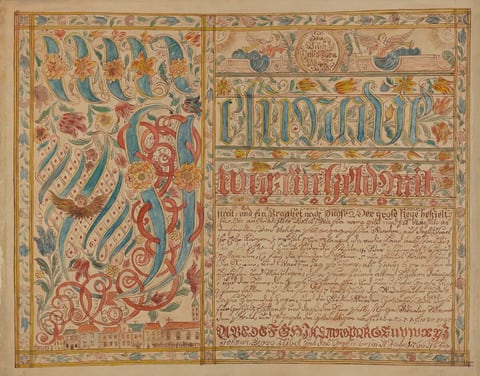
This is a painting of an intricate and colorful illuminated manuscript page. The full-description includes a richly decorated page featuring elaborate calligraphy and floral motifs. The left side showcases swirling ornamental patterns with vibrant colors - blues, reds, and golds - interwoven with blooming flowers and a small figure with wings. In the lower portion, there is a depiction of small buildings. The right side contains text in different styles, with the top section written in large decorative letters and the lower section in a more detailed script. The overall design is bordered with floral elements and intertwining vines. This is in the style of illuminated manuscripts found in historical European documents and books.
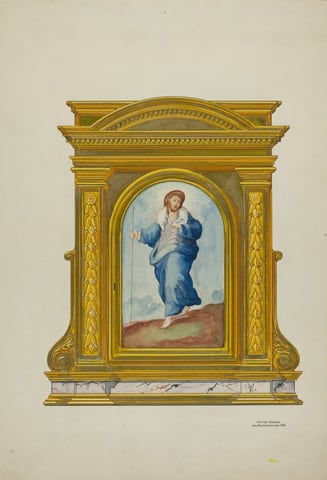
The image shows a painted artwork within an ornate frame. The artwork features a figure standing with one hand raised. The figure has long hair and a beard, and wears flowing blue and white garments. The background shows an earthy surface and a sky. The frame is gold and elaborately designed. The scene is set against a blank, light-colored background.
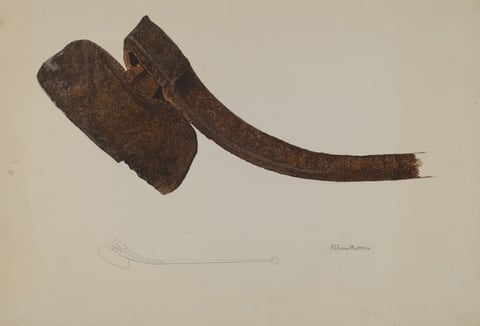
The image shows a large, rusted ax with a curved brown handle placed diagonally across the canvas. The color palette consists of muted browns and beiges, highlighting the aged appearance of the ax. Beneath the ax, there is a faint outline sketch of a similar object, and the artist's signature is located to the right of the sketch. The ax is in the upper half of the image, while the sketch and signature are in the center-bottom section.
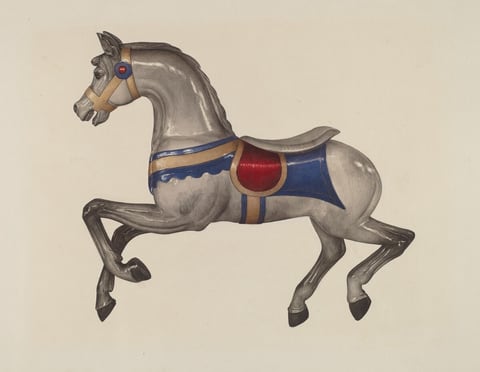
This is a painting of a carousel horse. The image shows a gray carousel horse with glossy highlights and shading. The horse has a blue and red saddle with gold bands, and a blue harness with red accents. The horse is mid-gallop, with animated legs. The background is plain to focus on the horse's design. The style is detailed and realistic, reminiscent of carousel art from the late 19th to early 20th century.
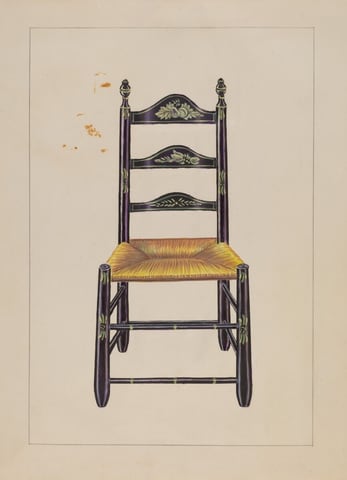
The image shows a wooden chair with a rush seat. It features ornate details on the backrest. The color palette includes dark wood tones, pale greenish detailing, and a warm yellowish hue for the seat. The chair is centrally positioned in the image, viewed from the front, with no other objects around it.

The works in this room are listed below.

Works in this room

The everyday art of early America, recorded in watercolour by the Index of American Design.

Section 1, north wall

  1. This is a painting of an intricate and colorful illuminated manuscript page. The full-description includes a richly decorated page featuring elaborate calligraphy and floral motifs. The left side showcases swirling ornamental patterns with vibrant colors - blues, reds, and golds - interwoven with blooming flowers and a small figure with wings. In the lower portion, there is a depiction of small buildings. The right side contains text in different styles, with the top section written in large decorative letters and the lower section in a more detailed script. The overall design is bordered with floral elements and intertwining vines. This is in the style of illuminated manuscripts found in historical European documents and books.
    FrakturAlbert Levone, 1935/1942Courtesy National Gallery of Art, Washington
  2. The image shows a painted artwork within an ornate frame. The artwork features a figure standing with one hand raised. The figure has long hair and a beard, and wears flowing blue and white garments. The background shows an earthy surface and a sky. The frame is gold and elaborately designed. The scene is set against a blank, light-colored background.
    Original Tabernacle, for Communion VesselsDayton Brown, 1936Courtesy National Gallery of Art, Washington

Section 1, south wall

  1. The image shows a large, rusted ax with a curved brown handle placed diagonally across the canvas. The color palette consists of muted browns and beiges, highlighting the aged appearance of the ax. Beneath the ax, there is a faint outline sketch of a similar object, and the artist's signature is located to the right of the sketch. The ax is in the upper half of the image, while the sketch and signature are in the center-bottom section.
    Dumb IronAlfonso Moreno, c. 1938Courtesy National Gallery of Art, Washington
  2. This is a painting of a carousel horse. The image shows a gray carousel horse with glossy highlights and shading. The horse has a blue and red saddle with gold bands, and a blue harness with red accents. The horse is mid-gallop, with animated legs. The background is plain to focus on the horse's design. The style is detailed and realistic, reminiscent of carousel art from the late 19th to early 20th century.
    Carousel HorseDorothy Handy, c. 1939Courtesy National Gallery of Art, Washington
  3. The image shows a wooden chair with a rush seat. It features ornate details on the backrest. The color palette includes dark wood tones, pale greenish detailing, and a warm yellowish hue for the seat. The chair is centrally positioned in the image, viewed from the front, with no other objects around it.
    Ladderback ChairGerald Bernhardt, c. 1936Courtesy National Gallery of Art, Washington

Section 2, south wall
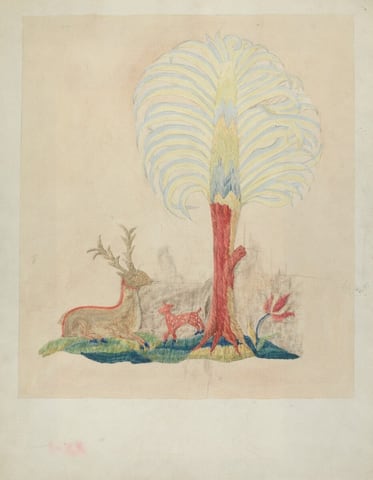
  1. This is a painting of two deer under a tree. The larger deer has antlers and is resting next to a smaller deer. They are depicted with red and brown strokes. The background shows a patch of earth and grass in green and blue. Beside the deer is a tree with colorful leaves or a feather-like structure and a red trunk. A pink flower is near the tree's base. The background is neutral. This painting is in the style of Henri Rousseau.
    Crewel EmbroideryHelen Dana, 1935/1942Courtesy National Gallery of Art, Washington
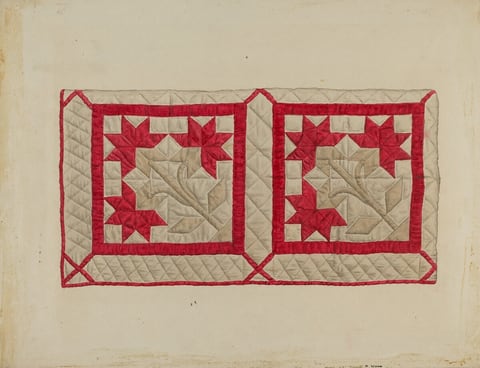
  2. The image shows two large quilt blocks with a matching design, side by side. Each block consists of red and beige fabric with quilted stitching creating a textured appearance. The color palette includes primarily red, beige, and dark stitching outlining the patterns. The quilt blocks are placed centrally on a light-colored surface.
    Patchwork QuiltPaul Ward, c. 1936Courtesy National Gallery of Art, Washington
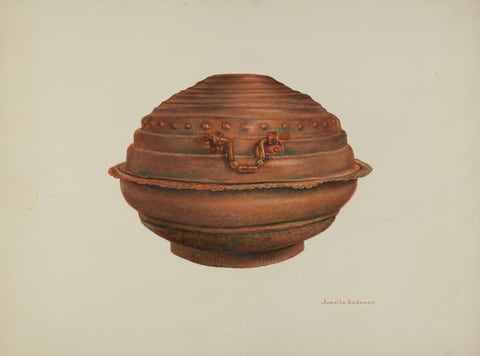
  3. The image depicts a large, round, domed container with a handle on its side. It has a textured and layered appearance with a central band. The color palette consists of various shades of brown and some orange tones. The container is centered in the image with the handle facing towards the viewer. The name "Janetta Badanes" is visible near the bottom right of the image.
    Copper Baptismal FontJuanita Donahoo, c. 1941Courtesy National Gallery of Art, Washington

Section 2, north wall
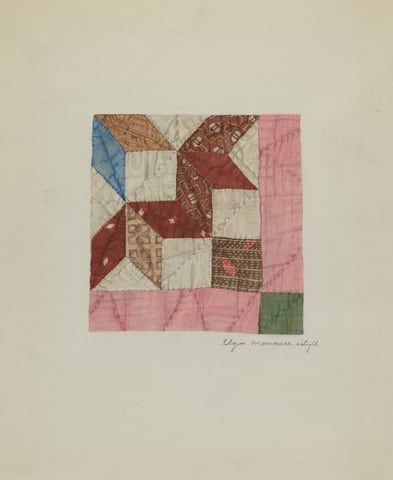
  1. This is a painting of a quilt design pattern. The image depicts a square quilt block featuring a variety of geometric shapes and patterns pieced together. The quilt features a mix of colors, including blues, reds, browns, and a pink border, with intricate patterns in the fabric segments. The textures and colors create an intricate optical composition resembling different geometric forms and depth. The piece is delicately framed within a larger white space, which emphasizes the detail of the quilt pattern. This is in the style of a traditional textile or quilting pattern illustrator.
    Cotton Bed QuiltElgin Moncure Styll, c. 1941Courtesy National Gallery of Art, Washington
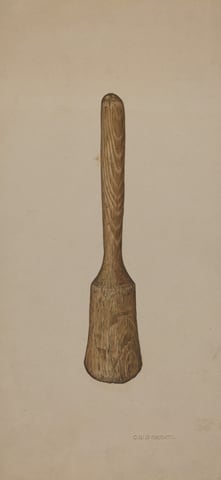
  2. A wooden mallet is displayed on a beige background. The mallet has a rounded handle and a broad head, showcasing earthy brown tones with variations in the wood grain. Positioned centrally, the mallet stands upright in the image.
    Potato MasherClarence W. Dawson, c. 1940Courtesy National Gallery of Art, Washington
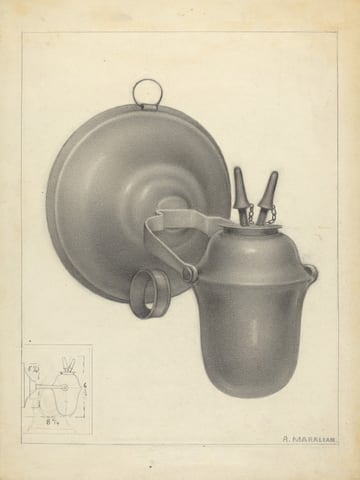
  3. The image depicts a detailed drawing of a wall-mounted vessel. It consists of a large, spherical body attached to a flat disc, with two smaller protrusions resembling handles or clips. The color palette is monochromatic with shades of gray, giving it a metallic or ceramic appearance. The objects are centrally positioned, with a small inset illustration in the bottom left corner showing annotations. The artist's signature, "A. Marshall," is located near the lower right corner of the image.
    LampArsen Maralian, c. 1936Courtesy National Gallery of Art, Washington

Section 3, north wall
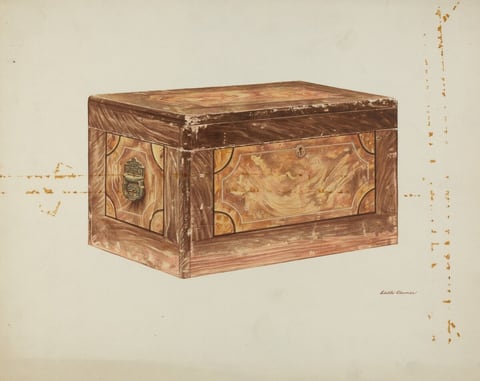
  1. The image shows a large rectangular wooden box with decorative panels, a metal handle on the side, and a keyhole on the front panel.
    "Chest"Edith Towner, 1940Courtesy National Gallery of Art, Washington
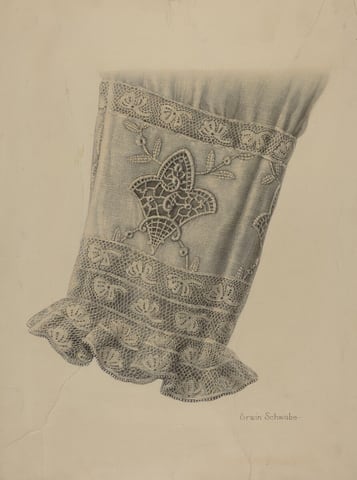
  2. The image shows a lace-trimmed sleeve with a floral lace design in the center, primarily in shades of gray and off-white. The sleeve is positioned vertically in the center of the image, with the top slightly obscured by shadow and the ruffled lace edge at the bottom. The lace details are intricate and precise, enhancing the texture and complexity of the design.
    Cuff LaceErwin Schwabe, c. 1937Courtesy National Gallery of Art, Washington
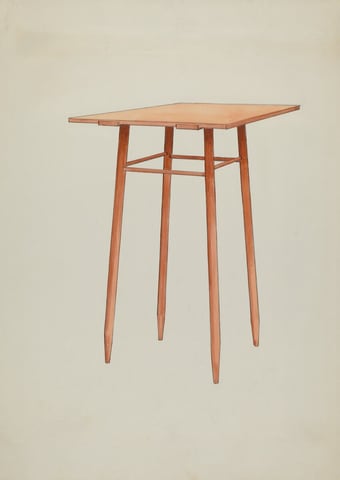
  3. The image shows a tall, narrow wooden table with a square top and four long, slender legs. The color palette is warm with shades of light brown and reddish-brown on the table. Positioned centrally, the table stands against a plain, light-colored background.
    Shaker StandRay Holden, c. 1936Courtesy National Gallery of Art, Washington

Section 3, south wall
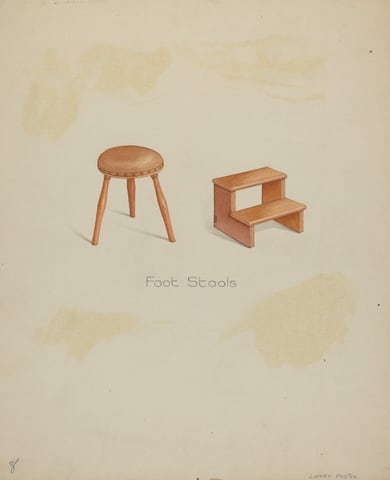
  1. The image shows two foot stools. One is a round stool with four legs and the other is a small two-step wooden staircase. The color palette includes shades of brown and tan against a light beige background. The round stool is positioned to the left, and the step-stool is to the right. Both are labeled with the words "Foot Stools" below them.
    Shaker StoolsLawrence Foster, 1935/1942Courtesy National Gallery of Art, Washington
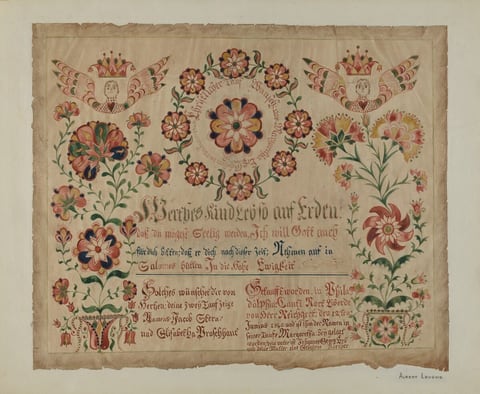
  2. This is a painting of a colorful floral design with text. The artwork features stylized flowers in shades of red, green, and yellow scattered across the page. In the center, there is calligraphic text in varying boldness and fonts, likely in German. Two symmetrical bird-like figures with human faces and crowns are above the text. The piece combines imagery with artistic lettering in a style reminiscent of traditional Pennsylvania German fraktur. The artwork is bordered by a thin line, suggesting it's part of a larger artifact or document.
    Pa. German Birth CertificateAlbert Levone, c. 1940Courtesy National Gallery of Art, Washington