Floor plan

Style galleriesAmerican folk and design
American folk and design
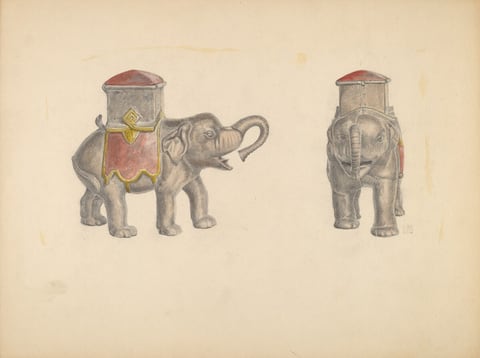
This is a drawing of two ornate elephants. The image depicts two stylized elephants, each adorned with decorative elements. Both elephants are shown carrying a structure on their backs, resembling a small tower or box with a red domed top. The left elephant is turned to the side, its trunk raised. The right elephant faces forward. Each structure on their backs is detailed with intricate designs, including a diamond shape on the side. The overall composition suggests a ceremonial or regal theme. The subtle use of colors like red and gold enhances the ornate appearance. The coloring and shading indicate an attention to detail typical of deliberately crafted illustrations.
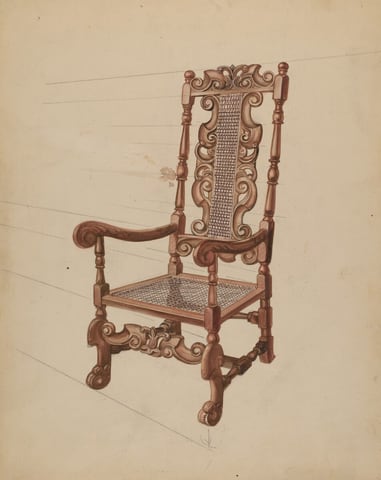
The image shows an ornate chair with a high back, decorative carvings along its arms, legs, and backrest, a woven or cane seat and back, and intricate patterns. The chair is detailed with earthy brown tones and subtle shading accentuating the wood texture and design motifs. It is placed in the center of the image, facing slightly to the left, with linear guides indicating perspective and depth on a plain background.
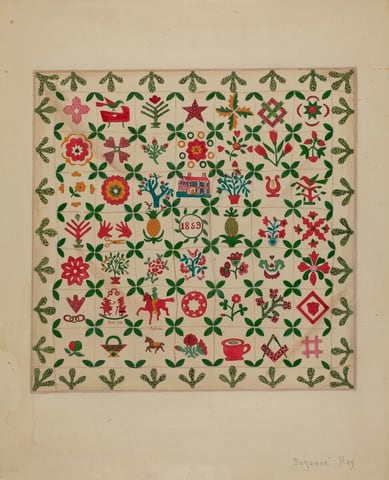
This is a painting of a decorative quilt pattern. The image shows a grid of square sections with various colorful motifs including stars, flowers, a horse, a house, and a cup. The design features vibrant colors, symmetrical patterns, and a central section with the date "1859". The quilt border has leaf-like patterns creating a frame around the central grid. The style is folk art.
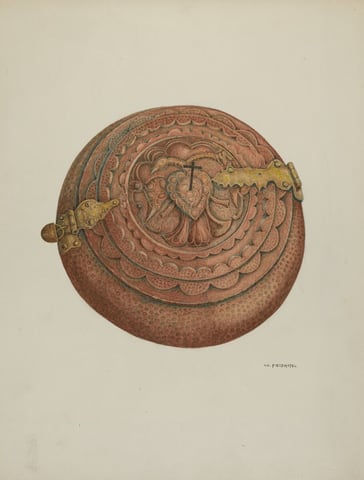
The image features a round, ornately decorated object resembling a shield with metallic-looking decorative hinges on its surface. The color palette is primarily earthy tones such as brown, red, and hints of gold. The object is centered in the image, viewed from the front, with engravings decorating its surface. The background is plain and light in color.
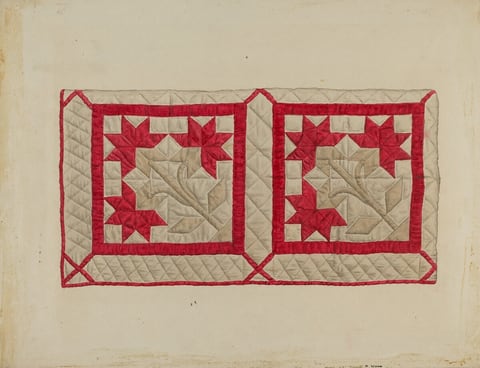
The image shows two large quilt blocks with a matching design, side by side. Each block consists of red and beige fabric with quilted stitching creating a textured appearance. The color palette includes primarily red, beige, and dark stitching outlining the patterns. The quilt blocks are placed centrally on a light-colored surface.
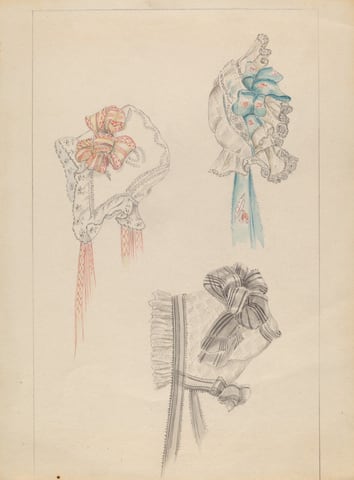
This is a drawing of three decorative bonnets. The drawing features three different hat designs, each embellished with lace, ribbon, and bow details. The upper left bonnet is adorned with pink hues and intricate lace, displaying a floral-like bow. The top right bonnet showcases a turquoise ribbon and bow, surrounded by soft lace. The lower bonnet is in grayscale, with shadowing for dimension, featuring a checkered ribbon. Each hat is detailed with line work and shading, conveying elegance.

The works in this room are listed below.

Works in this room

The everyday art of early America, recorded in watercolour by the Index of American Design.

Section 1, north wall

  1. This is a drawing of two ornate elephants. The image depicts two stylized elephants, each adorned with decorative elements. Both elephants are shown carrying a structure on their backs, resembling a small tower or box with a red domed top. The left elephant is turned to the side, its trunk raised. The right elephant faces forward. Each structure on their backs is detailed with intricate designs, including a diamond shape on the side. The overall composition suggests a ceremonial or regal theme. The subtle use of colors like red and gold enhances the ornate appearance. The coloring and shading indicate an attention to detail typical of deliberately crafted illustrations.
    Iron Bank ElephantZ.S. Lupus, c. 1938Courtesy National Gallery of Art, Washington
  2. The image shows an ornate chair with a high back, decorative carvings along its arms, legs, and backrest, a woven or cane seat and back, and intricate patterns. The chair is detailed with earthy brown tones and subtle shading accentuating the wood texture and design motifs. It is placed in the center of the image, facing slightly to the left, with linear guides indicating perspective and depth on a plain background.
    ArmchairAgnes Karlin, c. 1936Courtesy National Gallery of Art, Washington
  3. This is a painting of a decorative quilt pattern. The image shows a grid of square sections with various colorful motifs including stars, flowers, a horse, a house, and a cup. The design features vibrant colors, symmetrical patterns, and a central section with the date "1859". The quilt border has leaf-like patterns creating a frame around the central grid. The style is folk art.
    Applique QuiltSuzanne Roy, 1938Courtesy National Gallery of Art, Washington

Section 1, south wall

  1. The image features a round, ornately decorated object resembling a shield with metallic-looking decorative hinges on its surface. The color palette is primarily earthy tones such as brown, red, and hints of gold. The object is centered in the image, viewed from the front, with engravings decorating its surface. The background is plain and light in color.
    Baptismal FontWilliam Kieckhofel, c. 1941Courtesy National Gallery of Art, Washington
  2. The image shows two large quilt blocks with a matching design, side by side. Each block consists of red and beige fabric with quilted stitching creating a textured appearance. The color palette includes primarily red, beige, and dark stitching outlining the patterns. The quilt blocks are placed centrally on a light-colored surface.
    Patchwork QuiltPaul Ward, c. 1936Courtesy National Gallery of Art, Washington
  3. This is a drawing of three decorative bonnets. The drawing features three different hat designs, each embellished with lace, ribbon, and bow details. The upper left bonnet is adorned with pink hues and intricate lace, displaying a floral-like bow. The top right bonnet showcases a turquoise ribbon and bow, surrounded by soft lace. The lower bonnet is in grayscale, with shadowing for dimension, featuring a checkered ribbon. Each hat is detailed with line work and shading, conveying elegance.
    CapsUnrecorded American maker, 1935/1942Courtesy National Gallery of Art, Washington

Section 2, south wall
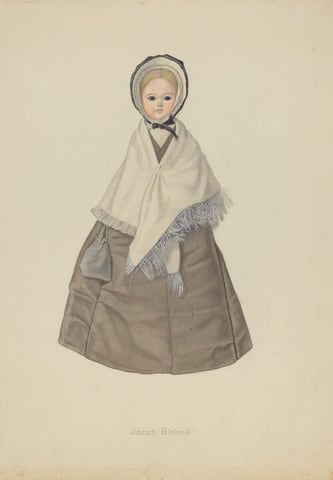
  1. The image depicts a young person standing upright with distinct facial features including rounded cheeks, a small mouth, and large eyes. They are wearing a brown dress with a cream-colored shawl, a bonnet with dark trim, and a pouch hanging from their left side. The background is plain and cream-colored.
    Quaker DollJacob Gielens, 1935/1942Courtesy National Gallery of Art, Washington
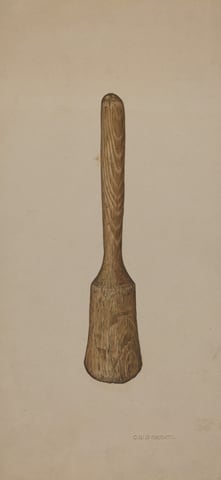
  2. A wooden mallet is displayed on a beige background. The mallet has a rounded handle and a broad head, showcasing earthy brown tones with variations in the wood grain. Positioned centrally, the mallet stands upright in the image.
    Potato MasherClarence W. Dawson, c. 1940Courtesy National Gallery of Art, Washington
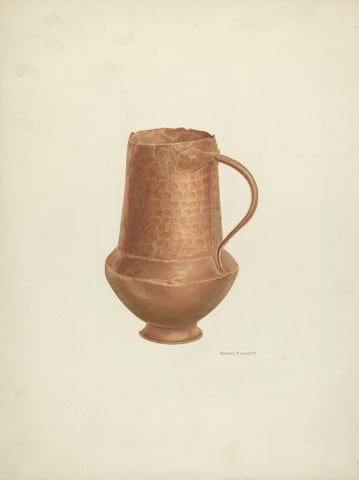
  3. The image shows a large, copper-colored pitcher with a hammered texture and a curving handle on the right side. The color palette consists of muted, warm tones of copper and brown against a pale beige background. The pitcher is centrally placed in the image, with its handle positioned on the right side.
    Copper CruetEdward Jewett, 1937Courtesy National Gallery of Art, Washington

Section 2, north wall
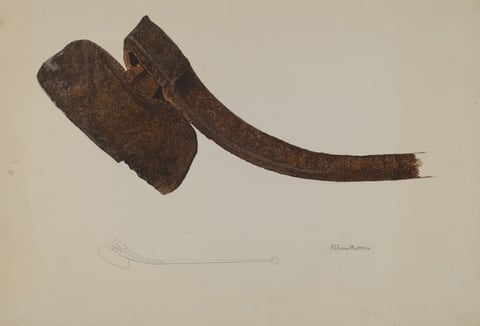
  1. The image shows a large, rusted ax with a curved brown handle placed diagonally across the canvas. The color palette consists of muted browns and beiges, highlighting the aged appearance of the ax. Beneath the ax, there is a faint outline sketch of a similar object, and the artist's signature is located to the right of the sketch. The ax is in the upper half of the image, while the sketch and signature are in the center-bottom section.
    Dumb IronAlfonso Moreno, c. 1938Courtesy National Gallery of Art, Washington
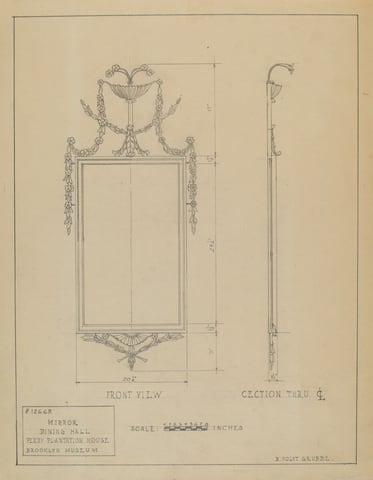
  2. This is a drawing of a decorative mirror. It presents a detailed design of an ornate mirror with two views: a front view and a sectional view. The mirror frame is embellished with elaborate motifs, including scrolls and floral elements. The sectional view shows the mirror's depth and structural details, indicating attention to construction. Measurements are included in inches, with title and notes providing context on the mirror's location and purpose as part of interior furnishings.
    MirrorB. Holst-Grubbe, 1935/1942Courtesy National Gallery of Art, Washington
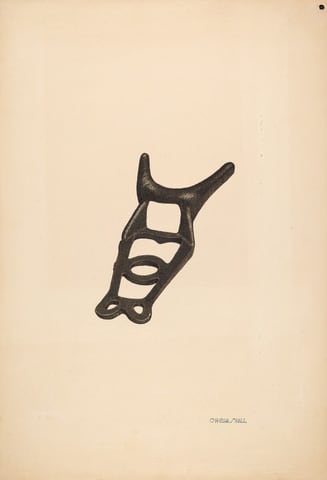
  3. This is a drawing of an abstract shape or artifact. The image features a central black object positioned against a plain, light-colored background. The object has a slightly irregular, elongated triangular form with rounded edges and contours. It includes a series of geometric holes and protrusions. The subtle shadowing suggests a three-dimensional form, yet the drawing maintains a simplicity that emphasizes the object's unique contours and cutouts.
    BootjackClaude Marshall, c. 1940Courtesy National Gallery of Art, Washington

Section 3, north wall

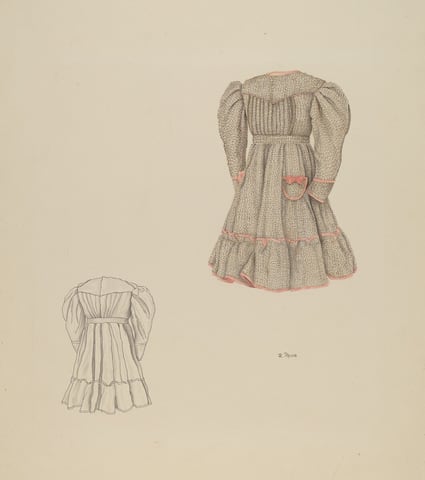
  1. The image depicts a detailed illustration of a dress with exaggerated puff sleeves and ruffles towards the bottom. It is created using a dotted pattern with red accents around the edges and seams. The color palette consists of mostly muted tones with touches of red. The dress is positioned in the upper right quadrant of the image, while a smaller, less detailed sketch of the same dress without colors is located in the lower left quadrant.
    Child's DressRay Price, c. 1937Courtesy National Gallery of Art, Washington
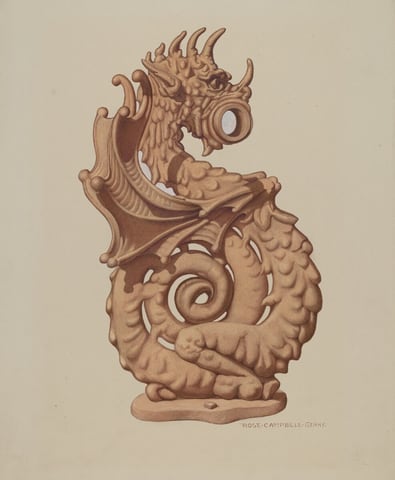
  2. The sculpture depicts a mythical creature resembling a dragon. It has a long spiraled body and an intricate head with spiky protrusions. The sculpture is a warm brown color. The dragon has bat-like wings, an open mouth, detailed texture with scales, and is standing on a small base.
    FenceRose Campbell-Gerke, c. 1941Courtesy National Gallery of Art, Washington

Section 3, south wall
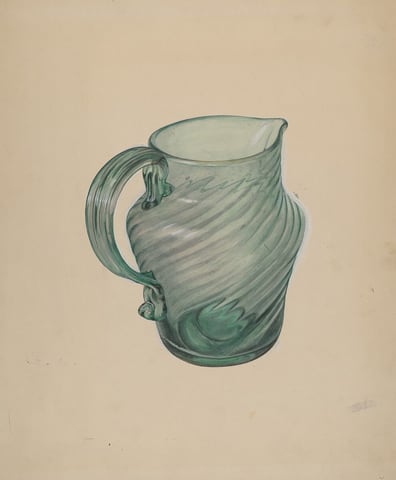
  1. The image shows a translucent pitcher in soft, pale green with swirling, striped patterns and a curved handle. It is placed in the center of the frame, with a neutral off-white background. The spout faces slightly to the left and the handle curves from the right side.
    Glass PitcherBeverly Chichester, c. 1937Courtesy National Gallery of Art, Washington
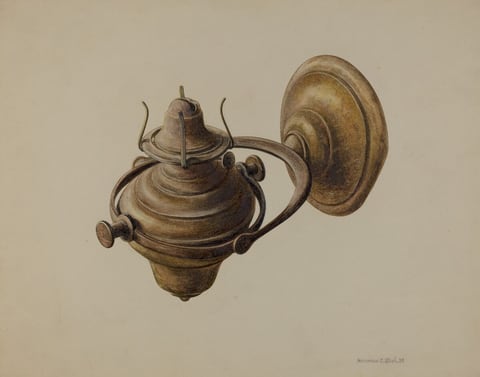
  2. The image displays a detailed drawing of a vintage wall-mounted lamp. The color palette consists of primarily browns and earthy tones, with hints of a metallic sheen. The lamp is centered in the image, with its base attached to the right side and extending to the left. A subtle shadow and highlights give the lamp a three-dimensional appearance against a plain, light beige background.
    Binnacle LampHerman O. Stroh, 1938Courtesy National Gallery of Art, Washington