Floor plan

Style galleriesAmerican folk and design
American folk and design
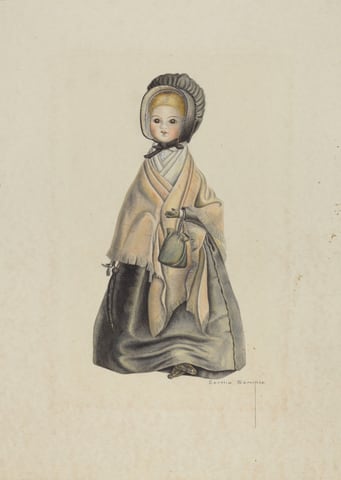
The image displays a full-body illustration of a person standing upright. They have a delicate and round face with rosy cheeks and small, pink lips. Their eyes are large and expressive, and they have light-colored hair peeking out from under a bonnet. The person's attire consists of a long, dark skirt and a light-colored shawl draped over their shoulders. They wear a hooded cloak tied with a bow at the neck, and hold a small bag in their left hand. The background is plain with a light-colored texture. The artwork is a painted illustration with visible fine lines and shading to enhance details of the clothing and facial features.
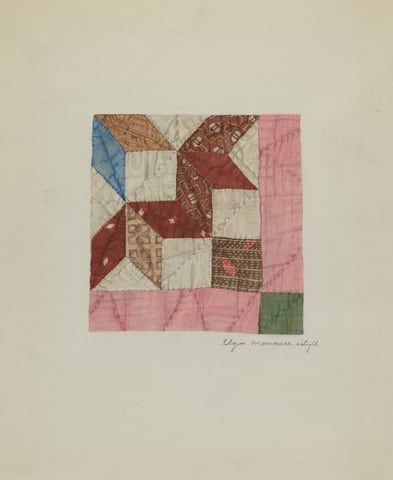
This is a painting of a quilt design pattern. The image depicts a square quilt block featuring a variety of geometric shapes and patterns pieced together. The quilt features a mix of colors, including blues, reds, browns, and a pink border, with intricate patterns in the fabric segments. The textures and colors create an intricate optical composition resembling different geometric forms and depth. The piece is delicately framed within a larger white space, which emphasizes the detail of the quilt pattern. This is in the style of a traditional textile or quilting pattern illustrator.
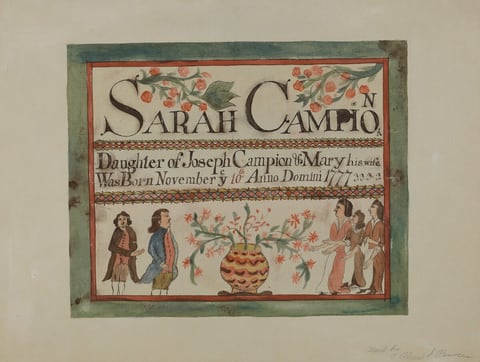
This painting is a birth record for Sarah Campion, daughter of Joseph and Mary Campion, born on November 16th, 1777. It features elaborate calligraphy and ornamental designs. The borders contain floral patterns with red and orange-colored flowers and green leaves. The central text is decorative, and at the bottom are human-like figures in colonial attire standing beside a flower vase. The artwork reflects a style reminiscent of early American folk art, created by an anonymous folk artist capturing the essence of 18th-century American artistry.
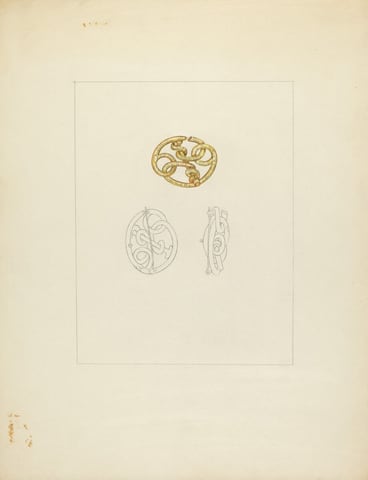
This is a drawing of decorative motifs. The image shows three distinct designs with ornate, swirling patterns. The uppermost design is in gold color. Two additional designs are sketched below in a lighter tone, likely pencil. The use of line and form emphasizes intricate looping patterns that suggest inspiration from natural forms such as vines or waves. The composition is against a plain background, drawing attention to the details and shapes of the motifs, presenting a sense of simplicity and artistry.
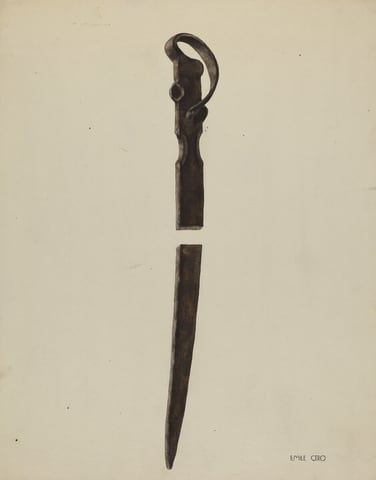
The image shows a dark metal object with two parts: a handle and a blade. The color palette consists of shades of dark brown on a light beige background. The handle is located at the top center, and the blade portion is positioned below it, both aligned vertically in the center of the frame.
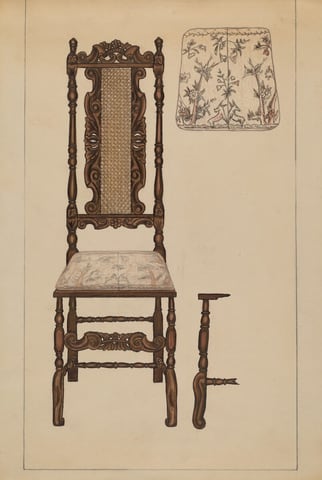
This is a drawing of a wooden chair with detailed upholstery. The chair has an ornate, high backrest with elaborate scrollwork and a woven central panel. The seat is cushioned and covered with a floral patterned fabric. There is also a separate drawing of the fabric pattern used on the seat and a sketch of one of the chair's legs to show the craftsmanship and decorative elements.

The works in this room are listed below.

Works in this room

The everyday art of early America, recorded in watercolour by the Index of American Design.

Section 1, north wall

  1. The image displays a full-body illustration of a person standing upright. They have a delicate and round face with rosy cheeks and small, pink lips. Their eyes are large and expressive, and they have light-colored hair peeking out from under a bonnet. The person's attire consists of a long, dark skirt and a light-colored shawl draped over their shoulders. They wear a hooded cloak tied with a bow at the neck, and hold a small bag in their left hand. The background is plain with a light-colored texture. The artwork is a painted illustration with visible fine lines and shading to enhance details of the clothing and facial features.
    Quaker DollBertha Semple, 1935/1942Courtesy National Gallery of Art, Washington
  2. This is a painting of a quilt design pattern. The image depicts a square quilt block featuring a variety of geometric shapes and patterns pieced together. The quilt features a mix of colors, including blues, reds, browns, and a pink border, with intricate patterns in the fabric segments. The textures and colors create an intricate optical composition resembling different geometric forms and depth. The piece is delicately framed within a larger white space, which emphasizes the detail of the quilt pattern. This is in the style of a traditional textile or quilting pattern illustrator.
    Cotton Bed QuiltElgin Moncure Styll, c. 1941Courtesy National Gallery of Art, Washington
  3. This painting is a birth record for Sarah Campion, daughter of Joseph and Mary Campion, born on November 16th, 1777. It features elaborate calligraphy and ornamental designs. The borders contain floral patterns with red and orange-colored flowers and green leaves. The central text is decorative, and at the bottom are human-like figures in colonial attire standing beside a flower vase. The artwork reflects a style reminiscent of early American folk art, created by an anonymous folk artist capturing the essence of 18th-century American artistry.
    Pa. German Birth CertificateGlenn Pearce, c. 1936Courtesy National Gallery of Art, Washington

Section 1, south wall

  1. This is a drawing of decorative motifs. The image shows three distinct designs with ornate, swirling patterns. The uppermost design is in gold color. Two additional designs are sketched below in a lighter tone, likely pencil. The use of line and form emphasizes intricate looping patterns that suggest inspiration from natural forms such as vines or waves. The composition is against a plain background, drawing attention to the details and shapes of the motifs, presenting a sense of simplicity and artistry.
    Gold BroochIsidore Steinberg, c. 1940Courtesy National Gallery of Art, Washington
  2. The image shows a dark metal object with two parts: a handle and a blade. The color palette consists of shades of dark brown on a light beige background. The handle is located at the top center, and the blade portion is positioned below it, both aligned vertically in the center of the frame.
    SpitEmile Cero, c. 1938Courtesy National Gallery of Art, Washington
  3. This is a drawing of a wooden chair with detailed upholstery. The chair has an ornate, high backrest with elaborate scrollwork and a woven central panel. The seat is cushioned and covered with a floral patterned fabric. There is also a separate drawing of the fabric pattern used on the seat and a sketch of one of the chair's legs to show the craftsmanship and decorative elements.
    Side ChairUnrecorded American maker, 1935/1942Courtesy National Gallery of Art, Washington

Section 2, south wall
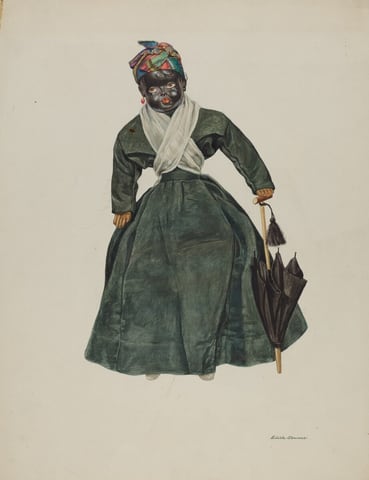
  1. The image depicts a person standing upright. They are wearing a dark green dress with long sleeves and a floor-length skirt. Over the dress, there is a white fabric wrapped around their shoulders. The person is holding a closed umbrella in their right hand. Their face is dark with distinguishable eyes and a nose, but specific facial features are not detailed. The person's hair is covered by a colorful headscarf with shades of blue, pink, and yellow. They are wearing large earrings, possibly pink or red. The background is plain and light with no additional objects present.
    Doll--"Hannah Hitch"Edith Towner, c. 1940Courtesy National Gallery of Art, Washington
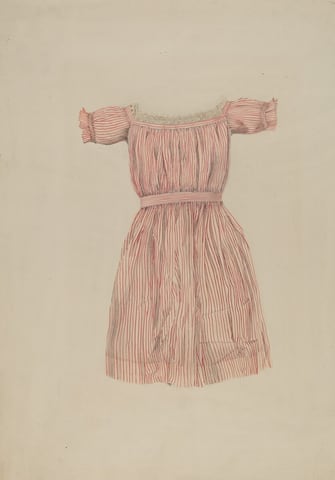
  2. The image shows a dress with a pink and white vertical striped pattern. The color palette is predominantly soft pinks and whites with subtle shading for light and shadow effects on the fabric. The dress is positioned at the center of the image, with sleeves extending slightly outward to the sides.
    Child's DressLucien Verbeke, c. 1937Courtesy National Gallery of Art, Washington
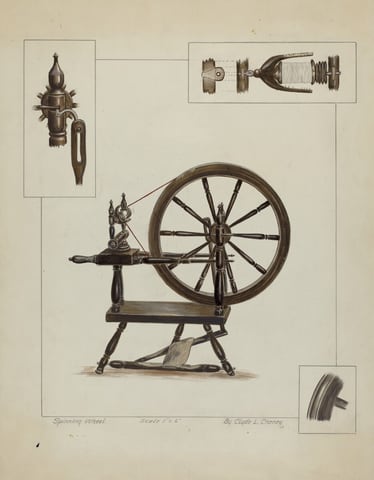
  3. The image shows a spinning wheel with intricate details, surrounded by smaller insets highlighting specific components. The color palette consists of muted browns, greens, and beiges. The spinning wheel is positioned in the center, with its circular wheel on the right and the spinning mechanism on the left. Detailed insets are placed around the spinning wheel, each showing different mechanical elements.
    Spinning WheelClyde L. Cheney, 1935/1942Courtesy National Gallery of Art, Washington

Section 2, north wall
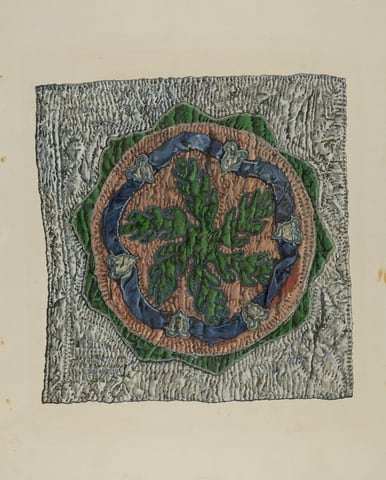
  1. The image shows various shapes and lines within a square border. In the center, there is an abstract circular pattern resembling a stylized floral design. The inner circle contains leaf-like shapes in green, surrounded by a ring resembling petals or decorative motifs. The overall effect is similar to a decorative shield or medallion. The background texture adds depth to the composition.
    Quilt Block - "E. Cooper" DesignFlorence Truelson, 1935/1942Courtesy National Gallery of Art, Washington
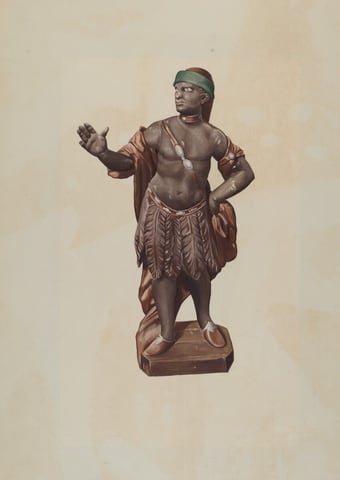
  2. The sculpture depicts a male figure standing upright with one hand raised and the other resting on his hip. The subject is wearing a garment that drapes over one shoulder and a feather-patterned skirt, accessorized with a headband. The colors of the sculpture are predominantly earth tones, including browns and a green headband. The material appears to be a type of stone or ceramic with a polished finish. The figure is slightly larger than everyday objects, allowing viewers to appreciate the intricacies of the carving and the details in the drapery and texture. The statue stands on a rectangular base that is consistent with the overall color palette.
    Cigar Store IndianRosamond P. Gray, 1935/1942Courtesy National Gallery of Art, Washington

Section 3, north wall
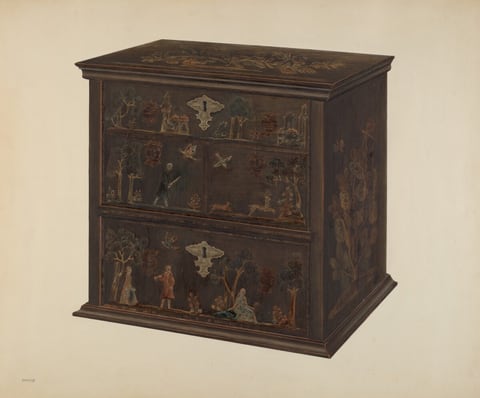
  1. This is a painting of a decorative wooden chest. The chest has intricate designs, such as painted figures, trees, and animals, creating a narrative scene on its front side, and floral motifs on its sides. The craftsmanship suggests it is an ornate object, potentially used for storage or as an ornamental piece. The painting focuses on the texture and details of the wood and decoration with precision, in a traditional arts and crafts or folk art style, emphasizing fine detail and storytelling through imagery on functional furniture.
    Jewel CabinetCharles Henning, c. 1939Courtesy National Gallery of Art, Washington
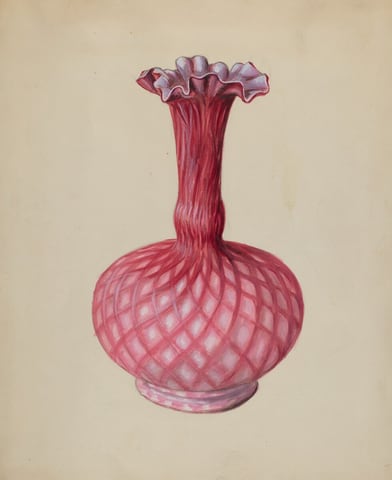
  2. The image displays a single ornate vase with a bulbous base and a ruffled top, taking up most of the frame. The vase is predominantly pink with red accents, the ruffled top is highlighted with white on the inner edges, and there's a crisscross pattern visible on the body. Against a plain beige background, the vase is centrally positioned.
    Ornamental Ruby VaseRobert Stewart, c. 1936Courtesy National Gallery of Art, Washington
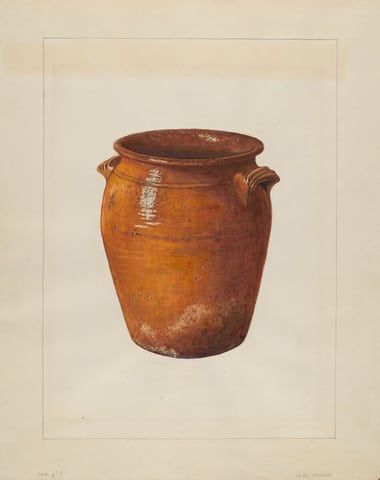
  3. The image features a large terracotta pot with two small handles on its sides. The pot is primarily in shades of earthy orange and brown with some lighter patches that suggest a slightly weathered texture. It is positioned centrally against a plain, light background.
    Preserving JarWilford H. Shurtliff, c. 1938Courtesy National Gallery of Art, Washington

Section 3, south wall
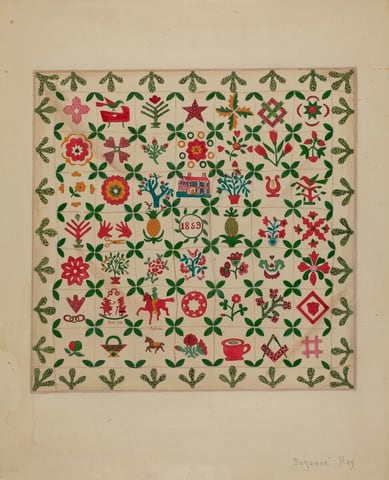
  1. This is a painting of a decorative quilt pattern. The image shows a grid of square sections with various colorful motifs including stars, flowers, a horse, a house, and a cup. The design features vibrant colors, symmetrical patterns, and a central section with the date "1859". The quilt border has leaf-like patterns creating a frame around the central grid. The style is folk art.
    Applique QuiltSuzanne Roy, 1938Courtesy National Gallery of Art, Washington
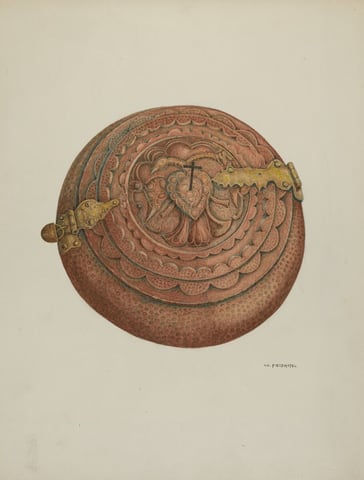
  2. The image features a round, ornately decorated object resembling a shield with metallic-looking decorative hinges on its surface. The color palette is primarily earthy tones such as brown, red, and hints of gold. The object is centered in the image, viewed from the front, with engravings decorating its surface. The background is plain and light in color.
    Baptismal FontWilliam Kieckhofel, c. 1941Courtesy National Gallery of Art, Washington