Floor plan

Time and placeThe 20th century

The 20th century

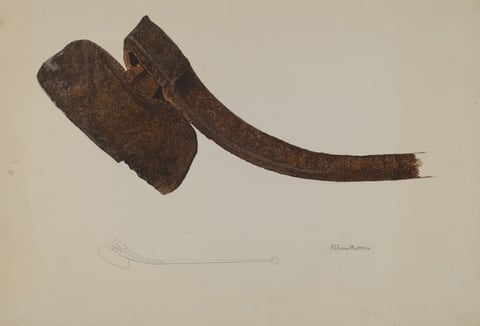
The image shows a large, rusted ax with a curved brown handle placed diagonally across the canvas. The color palette consists of muted browns and beiges, highlighting the aged appearance of the ax. Beneath the ax, there is a faint outline sketch of a similar object, and the artist's signature is located to the right of the sketch. The ax is in the upper half of the image, while the sketch and signature are in the center-bottom section.
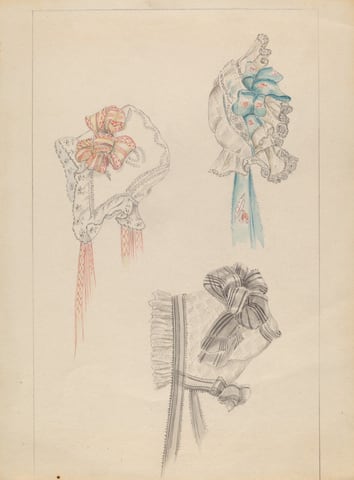
This is a drawing of three decorative bonnets. The drawing features three different hat designs, each embellished with lace, ribbon, and bow details. The upper left bonnet is adorned with pink hues and intricate lace, displaying a floral-like bow. The top right bonnet showcases a turquoise ribbon and bow, surrounded by soft lace. The lower bonnet is in grayscale, with shadowing for dimension, featuring a checkered ribbon. Each hat is detailed with line work and shading, conveying elegance.
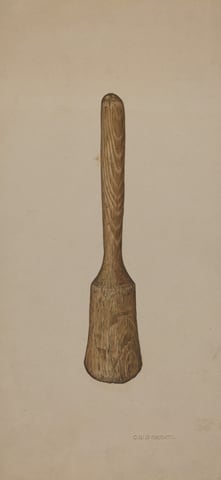
A wooden mallet is displayed on a beige background. The mallet has a rounded handle and a broad head, showcasing earthy brown tones with variations in the wood grain. Positioned centrally, the mallet stands upright in the image.
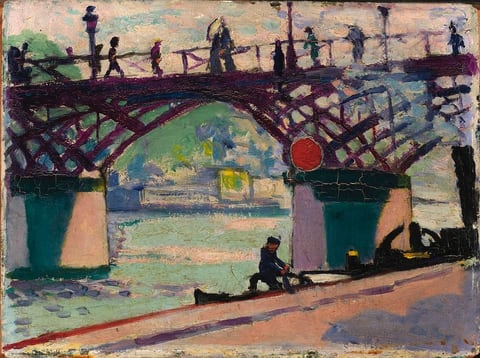
Pont des Arts, by H. Lyman Saÿen, 1908-1911
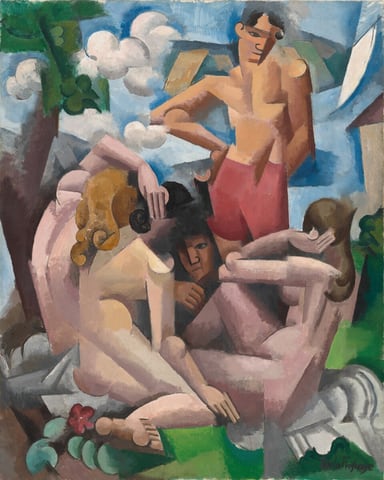
This painting depicts a group of men and women created by a collection of angular, geometric shapes with flat planes and blocks of color. One person is standing, and they appear to be a bare-chested man with tan skin and short, dark hair, who is wearing red shorts. He has his hand on his hip and looks off to the right. At his feet appear to be several seated people, although they are only partially visible. Three women with pale skin seem to be facing away from us; we can see their legs, arms, and torsos, although these don't all fit together. The woman on the left has blonde hair, the woman on the right has brown hair, and the woman between them has short black hair. None of their faces are visible. In the middle of this group, at the center of the painting, we see the face and hand of another person who is looking to the left. This person has light brown skin, and we can't see the rest of their body. Surrounding elements include a blue sky with abstract cloud forms, an angular tree on the left, and patches of brown, white, and green on the ground, with one red flower. A tan rectangle under a red triangle on the right edge suggests a building.
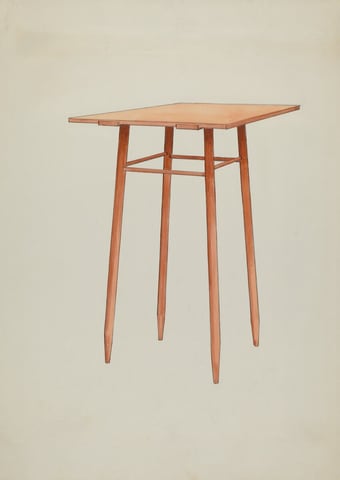
The image shows a tall, narrow wooden table with a square top and four long, slender legs. The color palette is warm with shades of light brown and reddish-brown on the table. Positioned centrally, the table stands against a plain, light-colored background.
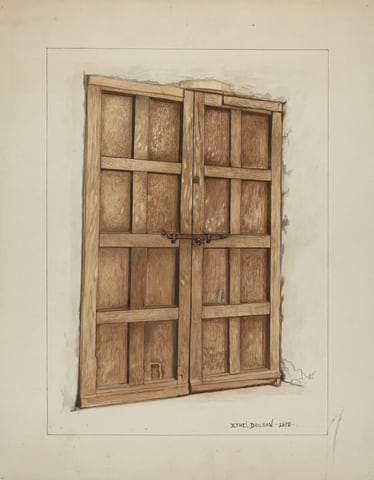
This is a drawing of a wooden window shutter in a light-colored wall. The detailed study shows the craftsmanship of the shutter, with a focus on texture, form, wood grain, and panels. The aged and weathered texture suggests exposure to the elements. The shutter is secured with a metal latch in the center. The wall is subtly shaded to imply depth and setting, with slight distress marks adding to the aged ambiance of the scene.
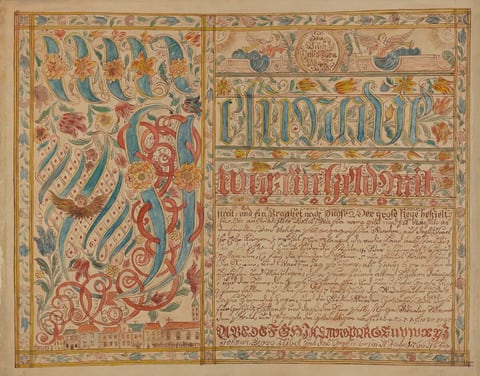
This is a painting of an intricate and colorful illuminated manuscript page. The full-description includes a richly decorated page featuring elaborate calligraphy and floral motifs. The left side showcases swirling ornamental patterns with vibrant colors - blues, reds, and golds - interwoven with blooming flowers and a small figure with wings. In the lower portion, there is a depiction of small buildings. The right side contains text in different styles, with the top section written in large decorative letters and the lower section in a more detailed script. The overall design is bordered with floral elements and intertwining vines. This is in the style of illuminated manuscripts found in historical European documents and books.

The works in this room are listed below.

Works in this room

Works made in the 20th century, anywhere in the world.

Section 1, north wall

  1. The image shows a large, rusted ax with a curved brown handle placed diagonally across the canvas. The color palette consists of muted browns and beiges, highlighting the aged appearance of the ax. Beneath the ax, there is a faint outline sketch of a similar object, and the artist's signature is located to the right of the sketch. The ax is in the upper half of the image, while the sketch and signature are in the center-bottom section.
    Dumb IronAlfonso Moreno, c. 1938Courtesy National Gallery of Art, Washington
  2. This is a drawing of three decorative bonnets. The drawing features three different hat designs, each embellished with lace, ribbon, and bow details. The upper left bonnet is adorned with pink hues and intricate lace, displaying a floral-like bow. The top right bonnet showcases a turquoise ribbon and bow, surrounded by soft lace. The lower bonnet is in grayscale, with shadowing for dimension, featuring a checkered ribbon. Each hat is detailed with line work and shading, conveying elegance.
    CapsUnrecorded American maker, 1935/1942Courtesy National Gallery of Art, Washington
  3. A wooden mallet is displayed on a beige background. The mallet has a rounded handle and a broad head, showcasing earthy brown tones with variations in the wood grain. Positioned centrally, the mallet stands upright in the image.
    Potato MasherClarence W. Dawson, c. 1940Courtesy National Gallery of Art, Washington
  4. Pont des Arts, by H. Lyman Saÿen, 1908-1911
    Pont des ArtsH. Lyman Saÿen, 1908-1911Courtesy of the Smithsonian American Art Museum

Section 1, south wall

  1. This painting depicts a group of men and women created by a collection of angular, geometric shapes with flat planes and blocks of color. One person is standing, and they appear to be a bare-chested man with tan skin and short, dark hair, who is wearing red shorts. He has his hand on his hip and looks off to the right. At his feet appear to be several seated people, although they are only partially visible. Three women with pale skin seem to be facing away from us; we can see their legs, arms, and torsos, although these don't all fit together. The woman on the left has blonde hair, the woman on the right has brown hair, and the woman between them has short black hair. None of their faces are visible. In the middle of this group, at the center of the painting, we see the face and hand of another person who is looking to the left. This person has light brown skin, and we can't see the rest of their body. Surrounding elements include a blue sky with abstract cloud forms, an angular tree on the left, and patches of brown, white, and green on the ground, with one red flower. A tan rectangle under a red triangle on the right edge suggests a building.
    The BathersRoger de La Fresnaye, 1912Courtesy National Gallery of Art, Washington
  2. The image shows a tall, narrow wooden table with a square top and four long, slender legs. The color palette is warm with shades of light brown and reddish-brown on the table. Positioned centrally, the table stands against a plain, light-colored background.
    Shaker StandRay Holden, c. 1936Courtesy National Gallery of Art, Washington
  3. This is a drawing of a wooden window shutter in a light-colored wall. The detailed study shows the craftsmanship of the shutter, with a focus on texture, form, wood grain, and panels. The aged and weathered texture suggests exposure to the elements. The shutter is secured with a metal latch in the center. The wall is subtly shaded to imply depth and setting, with slight distress marks adding to the aged ambiance of the scene.
    Sacristy Door at Mission San Juan BautistaEthel Dougan, 1938Courtesy National Gallery of Art, Washington
  4. This is a painting of an intricate and colorful illuminated manuscript page. The full-description includes a richly decorated page featuring elaborate calligraphy and floral motifs. The left side showcases swirling ornamental patterns with vibrant colors - blues, reds, and golds - interwoven with blooming flowers and a small figure with wings. In the lower portion, there is a depiction of small buildings. The right side contains text in different styles, with the top section written in large decorative letters and the lower section in a more detailed script. The overall design is bordered with floral elements and intertwining vines. This is in the style of illuminated manuscripts found in historical European documents and books.
    FrakturAlbert Levone, 1935/1942Courtesy National Gallery of Art, Washington

Section 2, south wall
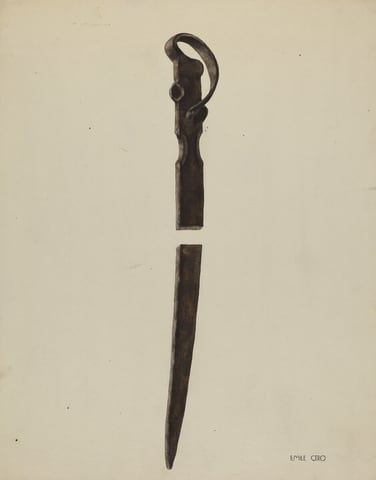
  1. The image shows a dark metal object with two parts: a handle and a blade. The color palette consists of shades of dark brown on a light beige background. The handle is located at the top center, and the blade portion is positioned below it, both aligned vertically in the center of the frame.
    SpitEmile Cero, c. 1938Courtesy National Gallery of Art, Washington
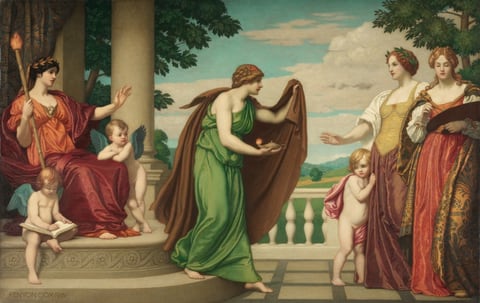
  2. Tradition, by Kenyon Cox, 1916
    TraditionKenyon Cox, 1916Courtesy of the Cleveland Museum of Art
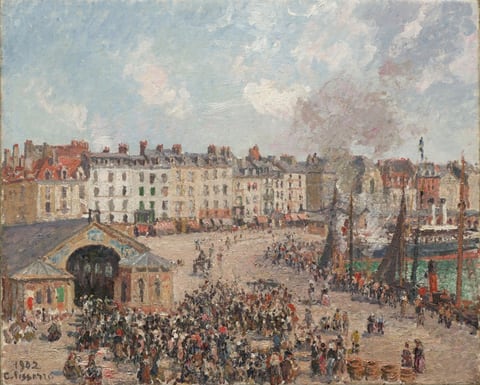
  3. Fishmarket, by Camille Pissarro, 1902
    FishmarketCamille Pissarro, 1902Courtesy of the Cleveland Museum of Art

Section 2, north wall
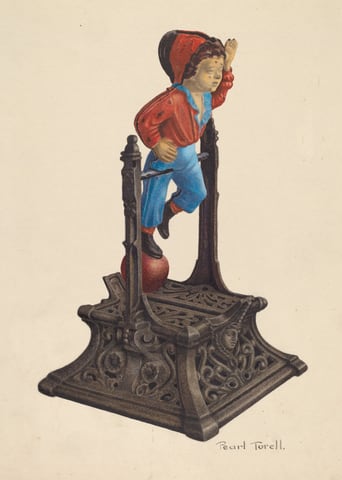
  1. The sculpture depicts a young boy dressed in a bright red coat, blue shirt, and blue pants, with black shoes. He is wearing a black hat with a red rim and has curly hair. The boy is balanced on one foot atop a red ball, with one leg lifted behind him and one hand held high above his head. The sculpture is made of painted, cast metal with intricate designs and textures. The boy stands on an ornately decorated dark pedestal.
    Toy BankPearl Torell, c. 1939Courtesy National Gallery of Art, Washington
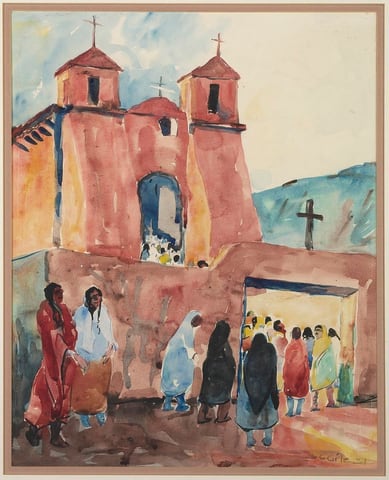
  2. Church, Rancho de Taos, by Selden Connor Gile, 1931
    Church, Rancho de TaosSelden Connor Gile, 1931Courtesy of the Smithsonian American Art Museum
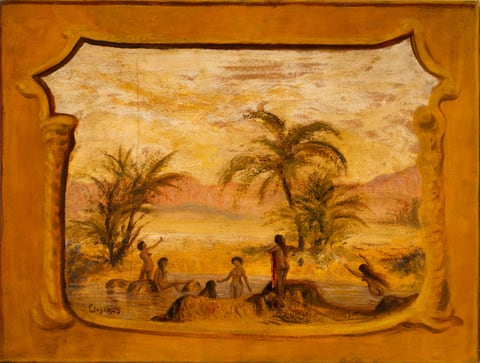
  3. Louis Eilshemius
    Samoan SceneLouis M. Eilshemius, 1908Courtesy of the Hirshhorn Museum and Sculpture Garden, Smithsonian Institution

Section 3, north wall
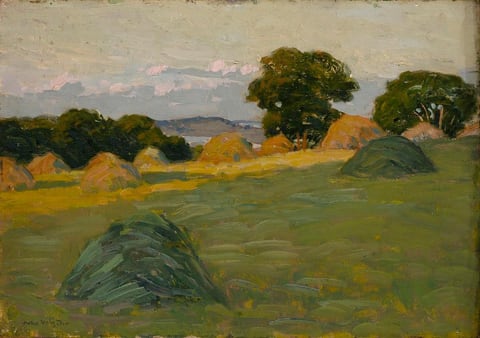
  1. The Hill Field, by Arthur Wesley Dow, 1908-1910
    The Hill FieldArthur Wesley Dow, 1908-1910Courtesy of the Smithsonian American Art Museum
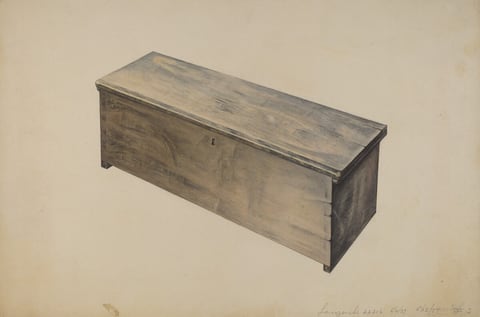
  2. The image shows a large wooden chest with a rectangular design and a keyhole on its front panel. The chest has a weathered look in muted browns and grays. It is positioned in the center with its top, front, and side panels visible. The background is plain and light in color.
    Utility ChestHenry Tomaszewski, 1937Courtesy National Gallery of Art, Washington