Floor plan

Time and placeThe 15th century

The 15th century

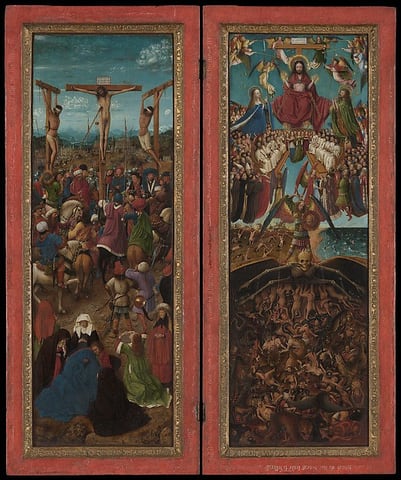
The Crucifixion; The Last Judgment, by Jan van Eyck, ca. 1436–38
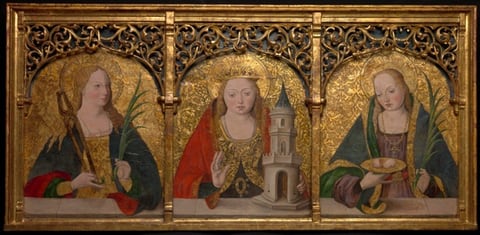
A work made of tempera on panel.
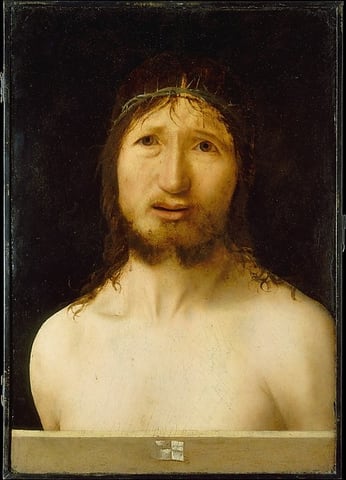
Christ Crowned with Thorns, by Antonello da Messina (Antonello di Giovanni d'Antonio)
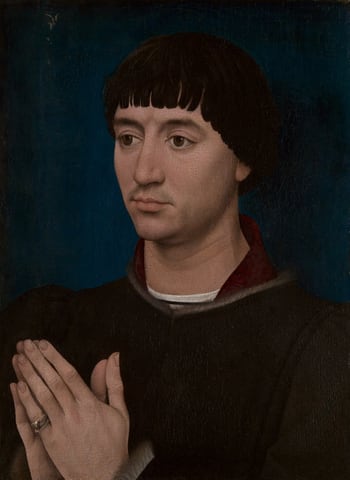
Painted dark colored portrait of man, hands in prayer.
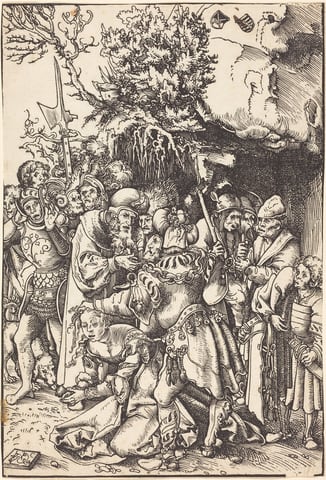
This is a drawing of a group of medieval figures and a tree. The image depicts a dense gathering of figures, all wearing elaborate period costumes, including helmets, robes, and armor. Their expressions vary. At the top, a leafy tree dominates the background alongside swirling clouds. The foreground hints at an interaction among the individuals, possibly a scene of discourse or judgment. Several personal items and tools are on the ground. The attention to detail and the use of line to create intricate patterns and textures are notable features of this work. This is in the style of Albrecht Dürer.
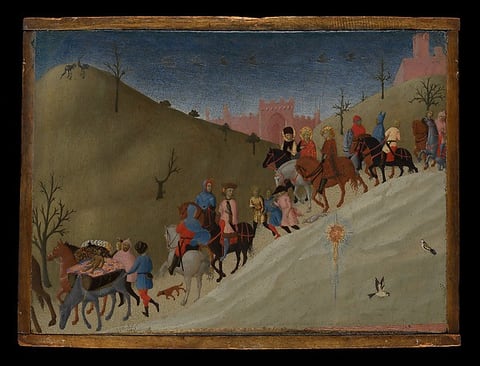
The Journey of the Magi, by Sassetta, ca. 1433–35
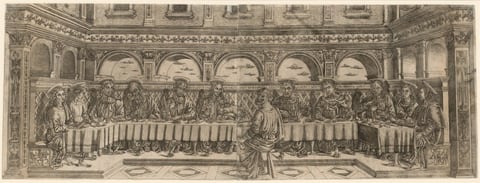
The Last Supper (pair), by Lucantonio degli Uberti, c. 1500

The works in this room are listed below.

Works in this room

Works made in the 15th century, anywhere in the world.

First room, north wall

  1. The Crucifixion; The Last Judgment, by Jan van Eyck, ca. 1436–38
    The Crucifixion; The Last JudgmentJan van Eyck, ca. 1436–38Courtesy of The Metropolitan Museum of Art
  2. A work made of tempera on panel.
    Saints Apollonia, Barbara, and AgathaMaster Alejo (Alejo Andía?), 1490–1500Courtesy of the Art Institute of Chicago
  3. Christ Crowned with Thorns, by Antonello da Messina (Antonello di Giovanni d'Antonio)
    Christ Crowned with ThornsAntonello da Messina (Antonello di Giovanni d'Antonio)Courtesy of The Metropolitan Museum of Art
  4. Painted dark colored portrait of man, hands in prayer.
    Portrait of Jean Gros (recto); Coat of Arms of Jean Gros (verso)Rogier van der Weyden, 1460–64Courtesy of the Art Institute of Chicago

First room, south wall

  1. This is a drawing of a group of medieval figures and a tree. The image depicts a dense gathering of figures, all wearing elaborate period costumes, including helmets, robes, and armor. Their expressions vary. At the top, a leafy tree dominates the background alongside swirling clouds. The foreground hints at an interaction among the individuals, possibly a scene of discourse or judgment. Several personal items and tools are on the ground. The attention to detail and the use of line to create intricate patterns and textures are notable features of this work. This is in the style of Albrecht Dürer.
    The Martyrdom of Saint BarbaraLucas Cranach the ElderCourtesy National Gallery of Art, Washington
  2. The Journey of the Magi, by Sassetta, ca. 1433–35
    The Journey of the MagiSassetta, ca. 1433–35Courtesy of The Metropolitan Museum of Art
  3. The Last Supper (pair), by Lucantonio degli Uberti, c. 1500
    The Last Supper (pair)Lucantonio degli Uberti, c. 1500Courtesy of the Cleveland Museum of Art

Second room, south wall
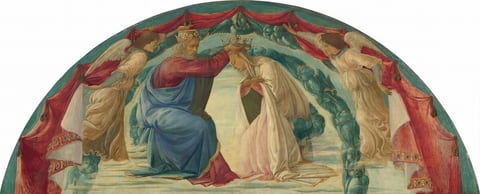
  1. In a wide, arched panel, a bearded man wearing a crown places another crown on the head of a woman. To our right, the woman bows her head with her eyes nearly closed and crosses her wrists over her chest. A white cloak covers her head, drapes over her shoulders, and pools in deep folds around her feet. The cloak is lined with pine green, and she wears a shell-pink dress. To our left, the man has shoulder-length, curly gray hair and a beard. His robe is dark rose pink, and the cloak is azure blue lined with pine green. Two winged angels have brown hair, short, white wings, and wear voluminous white robes. They stand to either side of the man and woman and hold up a swag of raspberry-red cloth hung with gold tassels. All the people have pale, peachy skin. Winged baby heads encircled with gold rays create an arch behind the man and woman, who sit on clouds. The background is pale blue sky.
    The Coronation of the VirginFilippino Lippi, c. 1475Courtesy National Gallery of Art, Washington
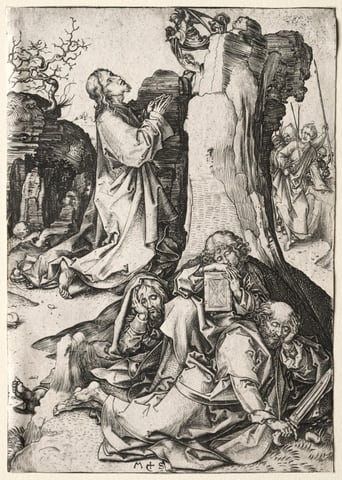
  2. The Passion: The Agony in the Garden, by Martin Schongauer, c. 1480
    The Passion: The Agony in the GardenMartin Schongauer, c. 1480Courtesy of the Cleveland Museum of Art
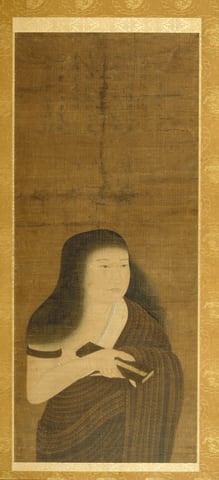
  3. A work made of hanging scroll; ink and color on paper.
    Monju Dressed in a Robe of Braided Grass (Nawa Monju)Japanese, dated 1415Courtesy of the Art Institute of Chicago

Second room, north wall
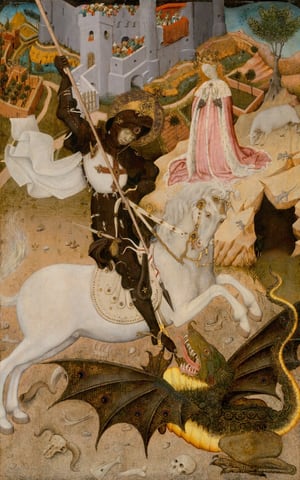
  1. St. George on white horse, piercing green, gold dragon
    Saint George and the DragonBernat Martorell, 1434–35Courtesy of the Art Institute of Chicago
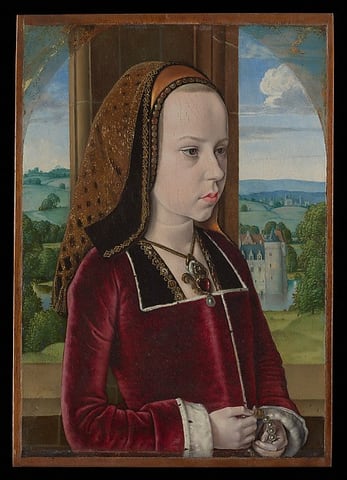
  2. Margaret of Austria, by Jean Hey (called Master of Moulins), ca. 1490
    Margaret of AustriaJean Hey (called Master of Moulins), ca. 1490Courtesy of The Metropolitan Museum of Art
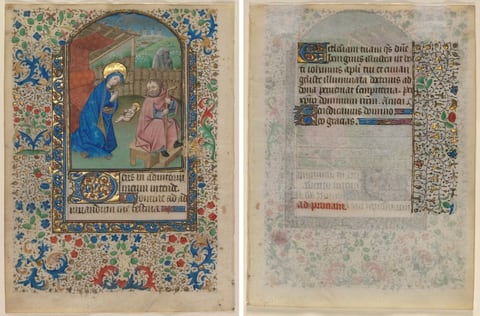
  3. Leaf from a Book of Hours: The Nativity (recto) and Text (verso), c. 1430
    Leaf from a Book of Hours: The Nativity (recto) and Text (verso)Unrecorded French maker, c. 1430Courtesy of the Cleveland Museum of Art
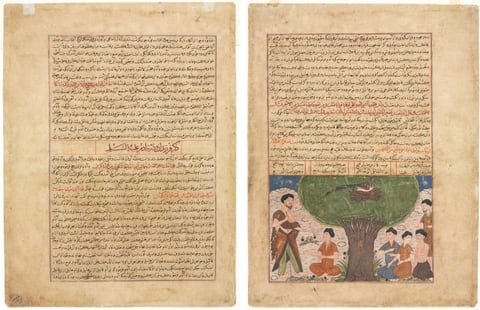
  4. Text Page, Persian Prose (recto); The Story of Adam peace upon him, his Sons and Progeny (verso), c. 1425
    Text Page, Persian Prose (recto); The Story of Adam peace upon him, his Sons and Progeny (verso)Unrecorded Persian maker, c. 1425Courtesy of the Cleveland Museum of Art

Third room, north wall
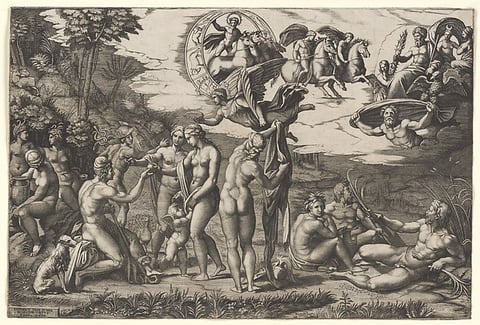
  1. The Judgment of Paris: he is sitting at left with Venus, Juno and Pallas Athena, a winged victory above. In the upper section the Sun in his chariot preceeded by Castor and Pollux on horseback, at lower right two river gods and a naiad above whom Jupiter, an eagle, Ganymede, Diana and another goddess, by Marcantonio Raimondi, ca. 1510–20
    The Judgment of Paris: he is sitting at left with Venus, Juno and Pallas Athena, a winged victory above. In the upper section the Sun in his chariot preceeded by Castor and Pollux on horseback, at lower right two river gods and a naiad above whom Jupiter, an eagle, Ganymede, Diana and another goddessMarcantonio Raimondi, ca. 1510–20Courtesy of The Metropolitan Museum of Art
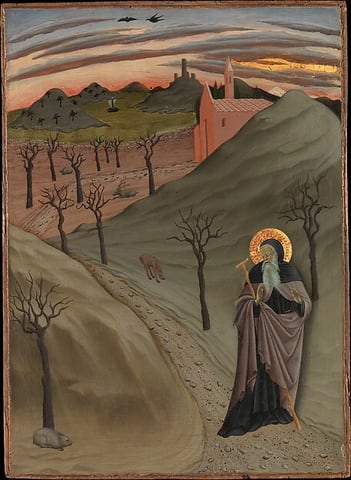
  2. Saint Anthony the Abbot in the Wilderness, by Sano di Pietro (Ansano di Pietro di Mencio), ca. 1440
    Saint Anthony the Abbot in the WildernessSano di Pietro (Ansano di Pietro di Mencio), ca. 1440Courtesy of The Metropolitan Museum of Art